Onir Resources
Naltrexone vs Vivitrol Guide
Explore the real differences between oral naltrexone and Vivitrol injections, from pricing to dosing flexibility, updated for Nov 2026.

By Justine Fowey, Onir Health Editorial Team
· Updated
Maybe your doctor mentioned naltrexone, or you ran across Vivitrol while reading about options for cutting back on drinking. Same drug, two formats, wildly different price tags. Picking between a pill you take every day and a shot you get once a month sounds simple, but the real differences go deeper than convenience. Let's sort through what actually matters for each one.
TLDR:
- Naltrexone is the generic name; Vivitrol is the brand-name monthly shot. Same drug, different delivery.
- Generic oral naltrexone runs under $100/month; a single Vivitrol injection costs around $1,758 without insurance.
- Avoid all opioids for 7 to 10 days before starting oral naltrexone and 7 to 14 days before a Vivitrol injection to prevent precipitated withdrawal.
- Oral tablets let you time doses before drinking (the Sinclair Method); Vivitrol delivers a steady 30-day dose you can't adjust.
- Onir prescribes generic naltrexone 50 mg tablets at $99/month with medication and clinician care included.
Naltrexone and Vivitrol Are the Same Active Ingredient
Yes, naltrexone and Vivitrol are the same active ingredient. Naltrexone is the generic name for an opioid antagonist that first received FDA approval in 1984. Vivitrol is the brand name for an extended-release injectable formulation of that same molecule, given once a month. ReVia is the brand name for the oral tablet form, taken daily. All three contain naltrexone and work through the same mechanism in the body.
That said, "same ingredient" does not mean "interchangeable product." A 50 mg tablet you swallow each morning and a 380 mg intramuscular shot you receive every four weeks are very different experiences, with different dosing schedules, side effect profiles, costs, and practical tradeoffs. The drug is identical; the delivery is not. Understanding that distinction matters before you decide which form fits your life, your budget, and your treatment goals.
How Naltrexone Works in the Body
When you drink, your brain releases a burst of endorphins that bind to opioid receptors. That binding produces the warm, rewarding feeling alcohol can create, and over time the cycle reinforces itself: drink, feel good, repeat. Naltrexone is an opioid antagonist. It sits on those same receptors and blocks endorphins from activating them. The drink still happens, but the reward signal is muted. With the reinforcement loop weakened, cravings gradually lose their grip, a process sometimes called pharmacological extinction, part of the broader naltrexone timeline for results.
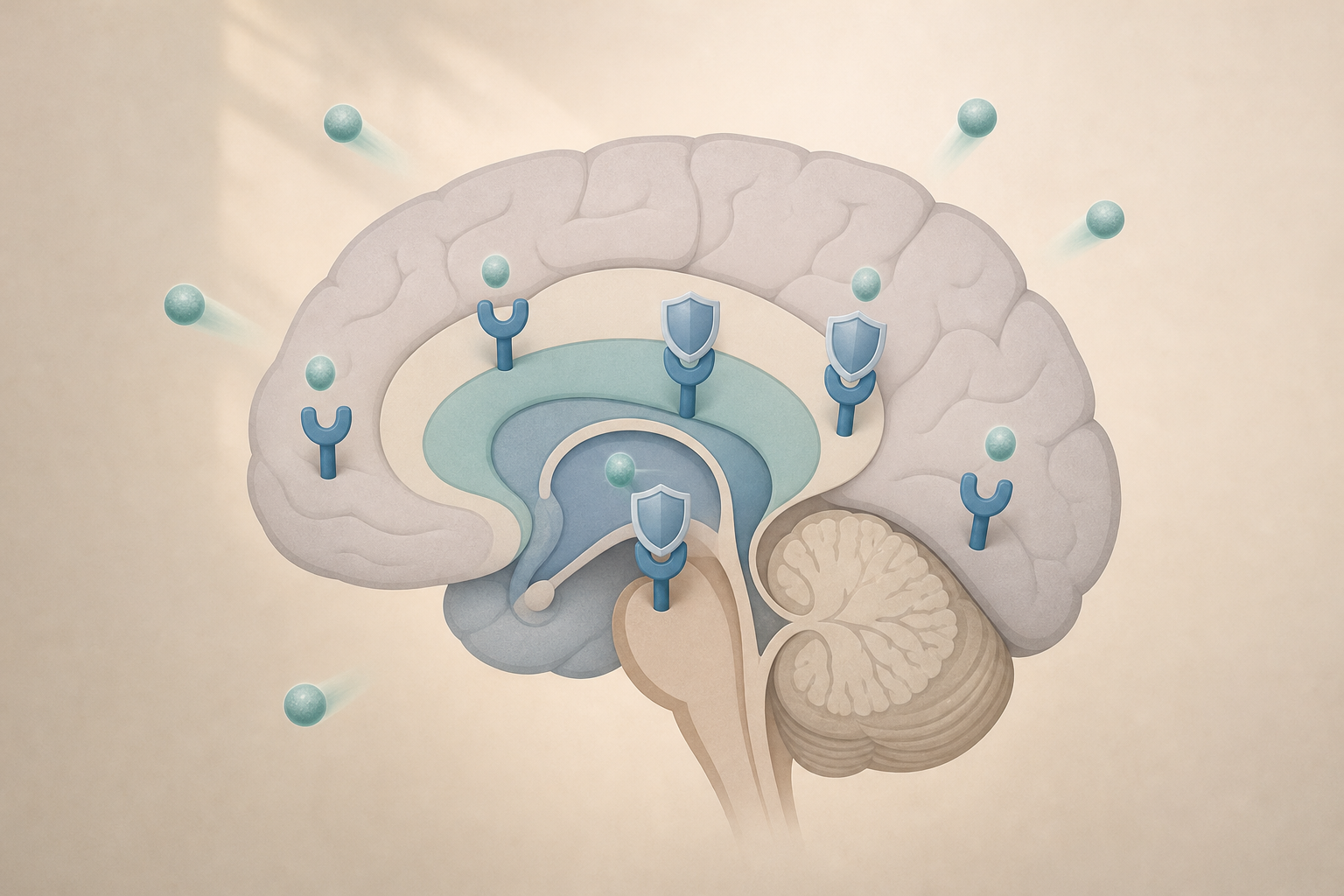
This receptor-blocking action is also why naltrexone carries FDA approval for opioid dependence. Heroin, fentanyl, and prescription painkillers all target the same opioid receptors naltrexone occupies. Whether the substance is an external opioid or your own endorphins released by alcohol, the job is the same: sit on the receptor and keep it from firing. The delivery form, pill or injection, changes how the drug reaches your bloodstream, but the mechanism at the receptor level stays identical.
Oral Naltrexone: Dosing, Schedule, and What to Expect
The standard oral dose is 50 mg once daily, prescribed as generic naltrexone hydrochloride (brand name ReVia). You can take it at any time of day, with or without food, though pairing it with a meal tends to reduce nausea in the first week or two. For people sensitive to medications, clinicians often start at 25 mg (half a tablet) for several days before stepping up to the full 50 mg.
Timing matters less than consistency. Pick a time that's easy to remember and stick with it. Some prescribers also use oral naltrexone on an "as needed" basis: you take the tablet roughly an hour before drinking. This approach is commonly called the Sinclair Method, and it relies on the same receptor-blocking action but targets the specific moment of reinforcement. Both daily and targeted dosing use the same 50 mg tablet; the difference is in the naltrexone dosing protocol your clinician recommends based on your drinking patterns and goals.
Vivitrol Injection: Dose, Administration, and Duration
Vivitrol is a 380 mg extended-release naltrexone suspension, administered intramuscularly once every four weeks. A healthcare provider gives the injection, typically into the gluteal muscle, in a clinical setting. You cannot self-inject. Each shot slowly releases naltrexone over roughly 30 days, which eliminates the need to remember a daily pill but does require a scheduled office visit every month.
Before the first injection, patients must be opioid-free for 7 to 14 days. Receiving the shot while opioids are still in your system can trigger severe precipitated withdrawal. Providers may use a naloxone challenge test to check for physical opioid dependence before starting treatment, as described in Vivitrol's prescribing information.
One detail worth knowing: there is currently no generic injectable version of naltrexone on the market. Vivitrol remains brand-name only, which has a direct impact on cost (covered in a later section) and availability compared to generic oral tablets.
Side Effects: Oral Naltrexone vs. Vivitrol
Both forms of naltrexone share a common set of systemic side effects because the active molecule is the same. With oral naltrexone, the most frequently reported naltrexone side effects are nausea, headache, fatigue, and reduced appetite. These tend to be mild and often fade within the first week or two, especially if you take the tablet with food or start at a lower dose.
Vivitrol produces those same systemic effects but adds injection site reactions: pain, hardness, lumps, or tenderness that can linger for days or weeks. Rarely, the tissue at the injection site develops a serious reaction requiring surgical intervention. That risk is unique to the injectable form and worth discussing with your provider before the first shot.
A question that comes up often: what happens if you drink on Vivitrol? A question many ask is what happens drinking on naltrexone: because naltrexone blocks the opioid receptors that carry alcohol's rewarding signal, drinking tends to feel flat. There is no disulfiram-like reaction, no forced vomiting or flushing. You can still drink; it just stops feeling like it used to. Both forms produce this same blunting effect.
What to Avoid When Taking Naltrexone (Oral or Injectable)
The single most important rule: do not take naltrexone if you have used any opioid recently. For oral naltrexone, that means at least 7 to 10 days opioid-free; for a Vivitrol injection, 7 to 14 days. That includes heroin, fentanyl, oxycodone, codeine, morphine, and prescription painkillers. Naltrexone will displace opioids from your receptors and trigger immediate, severe precipitated withdrawal.
Beyond opioids, a few other substances deserve attention:
- Kratom acts on opioid receptors and should not be combined with naltrexone. If you use kratom, tell your prescriber before starting.
- Cough medicines containing codeine or hydrocodone are opioids, part of a longer list of medications to avoid with naltrexone. Check labels or ask a pharmacist.
- Any opioid-based pain medication prescribed after surgery or injury will be blocked by naltrexone. Carry a medical alert card so emergency providers know your opioid receptors are occupied and can choose alternative pain management.
Both forms carry a liver warning in their FDA labeling (the former boxed warning was removed in 2013), mostly tied to doses well above standard. At standard prescribed doses the risk is low, but your clinician should know about any liver conditions before writing the prescription.
Cost Comparison: Naltrexone Tablets vs. Vivitrol Injection
Price is a fair question, and the gap between these two forms is wide enough to shape your decision.
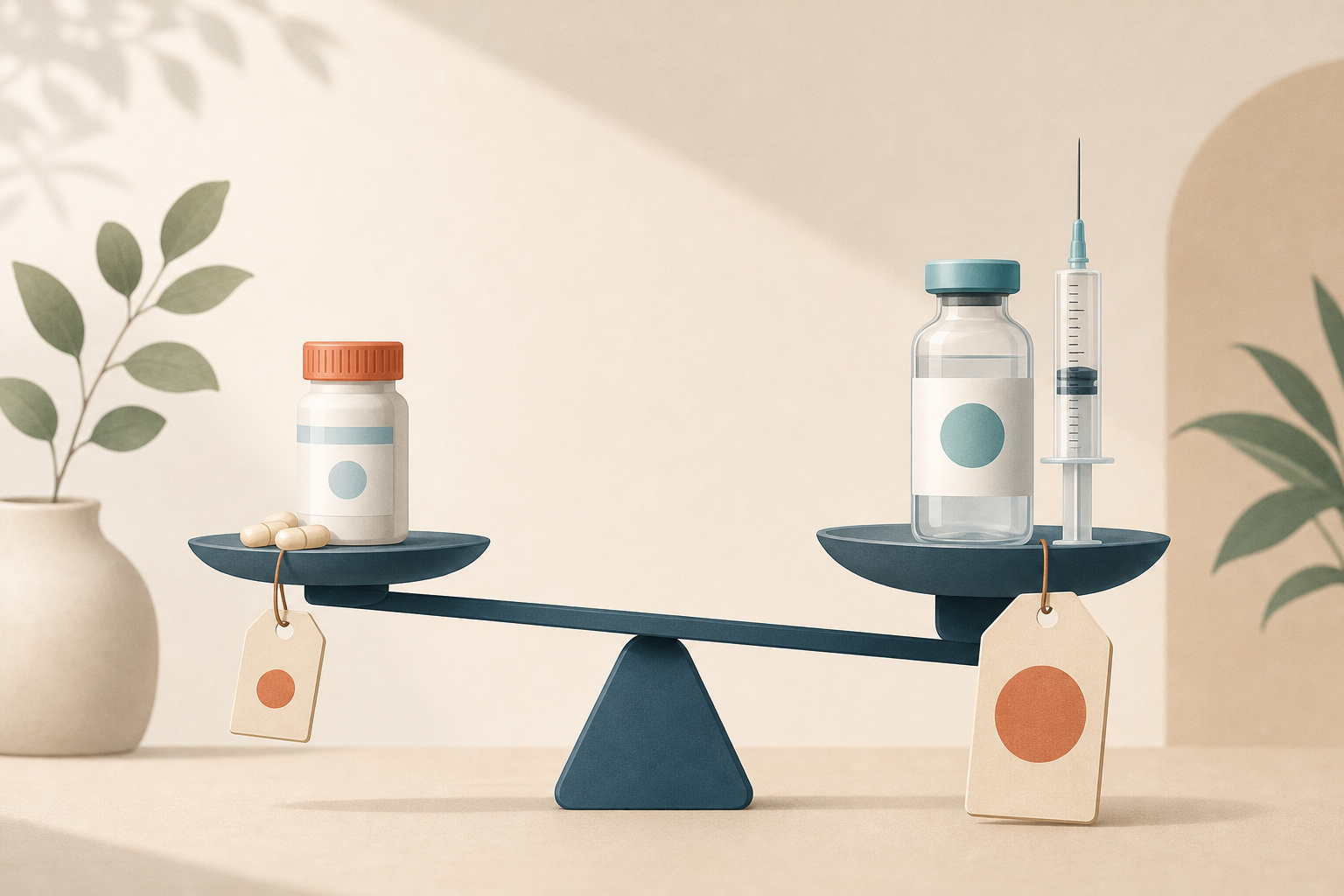
Generic oral naltrexone 50 mg tablets typically run $25 to $100 per month without insurance, depending on the pharmacy and whether you use a discount card, as detailed in this naltrexone cost breakdown. GoodRx, for instance, shows prices starting around $34 to $44 at common retail chains for a 30-tablet supply.
Vivitrol occupies a different bracket. Because no generic injectable naltrexone exists, you are paying brand-name prices. According to Drugs.com pricing data, a single 380 mg Vivitrol injection runs around $1,758 for cash-paying customers. The manufacturer offers a copay savings program covering up to $500 per month for commercially insured patients, and among those enrolled in that program, 88% had zero out-of-pocket costs based on 2025 claims data.
For self-pay patients, the math is stark: under $100 a month for oral naltrexone versus close to $1,800 for a single Vivitrol shot, before factoring in the clinic visit fee. Insurance coverage varies widely by plan and state, so checking with your insurer before committing to either form saves surprises.
Naltrexone for Weight Loss: What the Evidence Shows
Naltrexone by itself is not FDA-approved for weight loss. If you have searched for a naltrexone dose for weight loss, the results you found likely refer to Contrave, a combination tablet containing naltrexone hydrochloride and bupropion hydrochloride that received FDA approval in 2014 for chronic weight management. Contrave is prescribed to adults with obesity or those who are overweight and have at least one weight-related condition such as high blood pressure or type 2 diabetes.
The distinction matters. Contrave pairs naltrexone with bupropion, an antidepressant that also affects appetite signaling. The two drugs work on different brain pathways, and the weight loss indication belongs to the combination, not to naltrexone alone. A standalone 50 mg naltrexone tablet prescribed for alcohol use disorder is a different product with a different purpose, and a common related concern is whether naltrexone shows up on a drug test.
If weight management is your primary goal, talk to your doctor about whether Contrave or another option fits instead of expecting a standalone naltrexone prescription to do double duty.
Vivitrol vs. Sublocade: Different Drugs for Different Conditions
Vivitrol and Sublocade are both monthly injections used in opioid use disorder treatment, but they contain different active ingredients and work in opposite directions at the opioid receptor.
Vivitrol contains naltrexone, an opioid antagonist that blocks opioid receptors entirely. It is FDA-approved for both alcohol dependence and opioid dependence. Sublocade contains buprenorphine, a partial opioid agonist that gently activates those same receptors to ease withdrawal symptoms and reduce cravings. Sublocade is approved only for opioid use disorder and is not indicated for alcohol dependence.
Because Vivitrol blocks receptors, a patient must be completely opioid-free for at least 7 to 14 days before the first injection. Sublocade is typically started after a patient has already stabilized on sublingual buprenorphine (such as Suboxone). These two medications are not interchangeable, and switching between them requires careful clinical supervision. If your concern is alcohol and not opioids, Sublocade is not part of that conversation.
Choosing Between a Daily Pill and a Monthly Shot
Several practical factors tend to tip the scale one direction or the other, and most of them have less to do with the drug itself than with how your life is structured.
Factor | Oral Naltrexone (Generic) | Vivitrol (Brand-Name Injection) |
|---|---|---|
Dose | 50 mg tablet | 380 mg intramuscular injection |
Schedule | Once daily (or as needed with the Sinclair Method) | Once every 4 weeks in a clinic |
Self-administered | Yes | No, requires a healthcare provider |
Monthly cost (without insurance) | $25 to $100 | ~$1,758 |
Generic available | Yes | No |
Dosing flexibility | Can time around drinking; dose can be adjusted | Steady 30-day release; cannot be adjusted once injected |
Opioid-free period before starting | 7 to 10 days | 7 to 14 days |
- If remembering a daily pill feels unreliable, a monthly Vivitrol injection removes that variable entirely.
- If cost is a constraint and you are paying out of pocket, generic oral naltrexone at under $100 a month is far cheaper than a brand-name shot near $1,800.
- If you want to time your dose around drinking, oral tablets are your only option; Vivitrol delivers a steady dose you cannot adjust.
- If you lack easy access to a clinic that gives intramuscular injections every four weeks, the logistics of Vivitrol become a barrier on their own.
Neither form is universally better. Someone with shifting weekly routines may value the daily tablet's adaptability, while a person who struggles with consistency might prefer the rhythm of a monthly shot. These tradeoffs are worth walking through with a prescriber who knows your full medical picture.
Prescription Options for Reducing Drinking Without Rehab
Naltrexone, whether you take it as a daily tablet or receive it as a monthly Vivitrol injection, is one of three FDA-approved medications for alcohol use disorder. The other two are acamprosate and disulfiram (brand names Campral and Antabuse), each working through a distinct mechanism. Acamprosate helps stabilize brain chemistry disrupted by chronic drinking, easing the discomfort that can follow when someone stops. Disulfiram takes a different route: it causes unpleasant reactions like nausea and flushing if you drink while taking it, creating a strong deterrent.
All three can be prescribed in a standard outpatient visit or through telehealth. None of them require entering a residential rehab program. A prescriber writes the script, you fill it, and follow-up appointments track how things are going.
If you assumed your only options were willpower or a 28-day program, the reality is more flexible. Medication-assisted treatment through a licensed clinician, with regular check-ins and adjustable goals, reflects how the medication to cut back on drinking helps many people manage their relationship with alcohol over the long term.
How Onir Prescribes Oral Naltrexone for Alcohol Use Disorder
At Onir, we prescribe FDA-approved generic naltrexone hydrochloride 50 mg tablets for people looking to change their relationship with alcohol. The process starts with a free 60-second quiz, then a $19.99 clinician review. A licensed U.S. clinician reviews your history through a secure, asynchronous text-based chat, typically within 24 hours. If approved, medication ships to your door in unmarked packaging, and most members have it in hand within 5 to 7 business days of completing intake.
The program costs $99 a month, billed as $297 every 90 days, with medication and clinician care included, and you can browse Onir Health reviews from members before signing up. Because we are self-pay only, there is no insurance claim record from your treatment. The service is available in all 50 states, and you can cancel anytime from your dashboard without a phone call.
Final Thoughts on Choosing Between Naltrexone and Vivitrol
A $40 monthly pill and a $1,800 monthly shot contain the same drug. That fact alone should make the conversation with your prescriber a lot more grounded. Start with your budget, your routine, and your goals, and the right form tends to become clear on its own.
FAQ
Is there a prescription option to help you drink less without going to rehab?
Yes. Naltrexone, acamprosate, and disulfiram are all FDA-approved medications for alcohol use disorder that can be prescribed in a standard outpatient visit or through telehealth. None require a residential program. Onir, for example, prescribes generic naltrexone 50 mg tablets entirely online, with a licensed clinician review, medication delivery, and ongoing support included at $99 a month billed as $297 every 90 days.
Naltrexone vs Vivitrol for alcohol: daily pill or monthly shot?
Both contain the same active ingredient, naltrexone, and block opioid receptors the same way. The real differences are practical: generic oral naltrexone runs under $100 a month out of pocket and lets you time doses (useful for the Sinclair Method), while a single Vivitrol injection costs around $1,758 at cash price but removes the need to remember a daily pill. Your budget, schedule, and whether you want targeted dosing before drinking tend to be the deciding factors.
Can you take Vivitrol and naltrexone oral tablets together?
No. Vivitrol is already delivering naltrexone continuously over 30 days, so adding daily oral naltrexone on top would stack doses of the same drug without clinical benefit and increase the risk of side effects like nausea and liver stress. Your provider will prescribe one form or the other based on your situation, not both at once.
What should you avoid when taking naltrexone?
The most critical rule is to avoid all opioids for at least 7 to 10 days before starting naltrexone in any form, as the drug will trigger severe precipitated withdrawal. That includes heroin, fentanyl, prescription painkillers, codeine-containing cough medicines, and kratom. Carry a medical alert card so emergency providers know your opioid receptors are blocked and can choose non-opioid pain management if needed.
What is naltrexone and how does it help with drinking less?
Naltrexone is an opioid antagonist, FDA-approved since 1984, that blocks the brain receptors responsible for alcohol's rewarding feeling. When those receptors are occupied, the reinforcement loop between drinking and pleasure weakens, and cravings gradually lose their pull. Most Onir members notice the pull of alcohol fading within 10 to 14 days of starting the medication.
Is naltrexone the same as Vivitrol, or are they different medications?
They are the same active ingredient in different forms. Naltrexone is the generic name for the drug, and Vivitrol is the brand name for the extended-release injectable version given once a month. The oral tablet (brand name ReVia) and the Vivitrol shot both block opioid receptors the same way, but they differ in dosing schedule, cost, and how the drug enters your body.
What is the typical naltrexone dose for alcohol, and can your clinician adjust it?
The standard dose is 50 mg once daily as an oral tablet. Many clinicians start at 25 mg (half a tablet) for the first few days to ease common side effects like nausea, then step up to the full 50 mg. Your prescriber can also recommend targeted dosing — taking the tablet about an hour before drinking — depending on your patterns and goals.
How much does a Vivitrol injection cost compared to generic naltrexone tablets?
A single Vivitrol injection runs around $1,758 at cash price because no generic injectable version exists. Generic oral naltrexone 50 mg tablets typically cost $25 to $100 per month without insurance. Onir prescribes generic naltrexone at $99 a month (billed as $297 every 90 days) with medication and clinician care included.
What are common Vivitrol injection side effects that differ from the oral tablet?
Vivitrol shares the same systemic side effects as oral naltrexone — nausea, headache, fatigue, and reduced appetite — but adds injection site reactions unique to the shot. These can include pain, hardness, lumps, or tenderness at the injection site that may last days or weeks. In rare cases, a serious tissue reaction at the site may require surgical attention.
Can I build a treatment plan around the Sinclair Method with Vivitrol instead of oral naltrexone?
No. The Sinclair Method relies on taking a naltrexone tablet roughly one hour before drinking to block the reward signal at that specific moment. Vivitrol delivers a steady, continuous dose over 30 days with no way to time it around drinking occasions. If targeted dosing before drinking is part of your plan, oral naltrexone tablets are the only option.
What happens if you drink while on Vivitrol — are there Vivitrol side effects if you drink?
Drinking on Vivitrol won't cause a violent reaction like vomiting or flushing (that's disulfiram, a different drug). Because naltrexone blocks the opioid receptors that carry alcohol's rewarding feeling, drinking tends to feel flat and less satisfying. You can still drink; it just stops delivering the usual buzz, which is how the reinforcement loop gradually weakens.
How long can you take Vivitrol, and is there a recommended stopping point?
There is no hard time limit set by the FDA for how long you can stay on Vivitrol or oral naltrexone. Treatment length depends on your progress, your goals, and your clinician's assessment. Some people stay on naltrexone for months, others for years — the decision is made collaboratively with your prescriber based on how your relationship with alcohol is changing.
Vivitrol vs Sublocade — can I use either one for cutting back on drinking?
No. Only Vivitrol (naltrexone) is FDA-approved for alcohol dependence. Sublocade contains buprenorphine, a partial opioid agonist approved only for opioid use disorder, and it is not indicated for alcohol. These two injections contain different drugs that work in opposite ways at the opioid receptor, so they are not interchangeable.
Does Vivitrol have withdrawal symptoms if you stop getting the injection?
Naltrexone is non-addictive and non-habit-forming, so stopping Vivitrol does not cause the kind of physical withdrawal you would expect from opioids or alcohol itself. When you stop the injection, the drug clears your system over several weeks. Some people notice cravings returning as the medication wears off, which is the absence of the blocking effect rather than a withdrawal syndrome.
What's the fastest way to start naltrexone for alcohol online without going through insurance?
Onir lets you start with a free 60-second quiz, followed by a $19.99 clinician review. A licensed provider typically reviews your intake within 24 hours and, if approved, ships a 90-day supply of generic naltrexone 50 mg tablets in unmarked packaging. The program is self-pay ($99 a month, billed as $297 every 90 days), so there is no insurance claim record from your treatment, and the service is available in all 50 states.
The science behind Onir has been covered by
82%
drinking less within two weeks
30+ yrs
FDA-approved & clinically studied
1,200+
clinical studies behind it
$99
per month, shipped discreetly
In their words
“I started my medication about 8 days ago. I feel amazing. Don't really have any urges to drink alcohol.”
Keep reading
Resources
What to Try When Naltrexone Fails: November 2026 Guide
Explore proven alternatives to naltrexone for alcohol use disorder, including dosing, side effects, and cost comparisons for November 2026.
ReadResources
Antabuse or Naltrexone for Cutting Back on Drinking?
Comparing Antabuse and naltrexone for alcohol use disorder? Learn the key differences in mechanism, cost, and safety for October 2026.
ReadResources
Naltrexone and Weight Gain: What the Evidence Shows
Weight gain from naltrexone is uncommon. Discover the real causes behind scale changes and practical fixes, updated for 2026.
Read