Onir Resources
Sleep and Energy After Drinking Less
This November 2026 guide explains how drinking less improves sleep and energy, and why the adjustment period matters most.

By Justine Fowey, Onir Health Editorial Team

When was the last time you woke up after a few drinks and actually felt rested? Beyond "I got enough hours" rested, clear-headed, calm, ready to go. For a lot of people, that kind of morning stopped happening so gradually they didn't notice the shift. The good news is that cutting back tends to bring it back faster than you'd think, though there's a short recalibration window your body goes through first that catches most people off guard.
TLDR:
- Even two drinks can cut your REM sleep, leaving you tired after a full night in bed
- Expect a one-to-two-week adjustment window where sleep feels worse before it improves
- By week three or four, most people report steadier energy and fewer 3 a.m. wake-ups
- Stop drinking at least three to four hours before bed to give your body time to clear it
- Onir prescribes naltrexone via telehealth at $99/month if practical strategies aren't enough
How Alcohol Disrupts Your Sleep Architecture
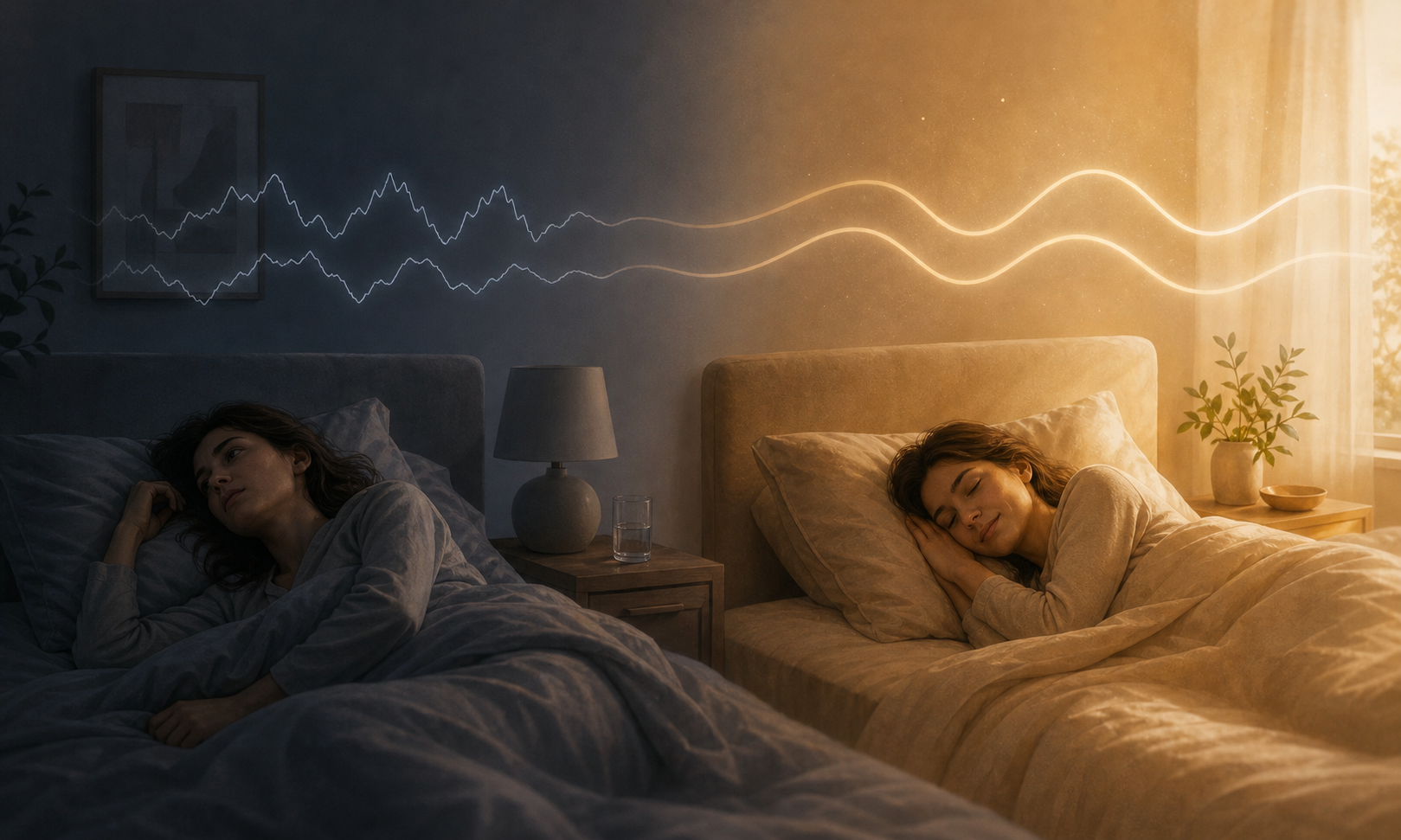
Alcohol is a central nervous system depressant, which is why a glass or two can make your eyelids heavy. You fall asleep faster, and that feels like a win. But the cost comes later, in the second half of the night, when your body finishes metabolizing the alcohol and your sleep fragments into lighter, more restless stages.
The biggest casualty is REM sleep, the phase tied to memory consolidation and emotional processing. A 2025 meta-analysis in Sleep Medicine Reviews found that even two standard drinks reduces REM sleep duration, with disruptions worsening at higher intake. For every 1 g/kg increase in dose, REM sleep dropped by about 40 minutes.
Alcohol also relaxes the muscles in your throat and narrows the airway, which can worsen snoring and sleep apnea. The result is a night that looks long on paper but leaves you unrested. You technically slept seven or eight hours, yet your brain missed the stages it needed most.
Why Alcohol Leaves You Fatigued the Next Day
Poor REM sleep is only part of the story. When your brain skips the restorative stages it needs, the effects show up the next day as sluggish thinking, shorter attention, and a flattened mood. But fatigue after drinking has roots that go well beyond a rough night.
Alcohol is a diuretic. It suppresses antidiuretic hormone, so your kidneys flush fluid faster than usual. By morning, even mild dehydration can leave you with a headache, dry mouth, and the kind of low-grade exhaustion that coffee barely dents.
Then there is cortisol. As alcohol clears your system overnight, cortisol levels rise, which is one reason you might wake at 3 or 4 a.m. with a racing heart or free-floating anxiety. That spike keeps your stress response running high well into the next day, draining energy reserves that would otherwise carry you through the afternoon.
Blood sugar adds another layer. Alcohol initially causes a spike, then a sharp drop as your liver turns to metabolizing ethanol over maintaining glucose. The result is a rollercoaster that can leave you shaky, irritable, and reaching for carbs by mid-morning. Combined with dehydration and heightened stress hormones, this creates a compounding energy deficit that feels far worse than a simple bad night of sleep.
So the sedative effect of that last drink is misleading. You felt relaxed going to bed, your body logged hours of sleep, yet the underlying physiology worked against you the entire time.
The Sleep Rebound Effect: What Happens When You Cut Back
When you first cut back, sleep often gets worse before it gets better. That sounds counterintuitive, but it makes sense once you understand what your brain has been doing.
If you've been drinking regularly, your nervous system has adapted to alcohol's sedative presence. Remove that sedation, and the brain is left in a mildly excitatory state while it recalibrates. The result can be difficulty falling asleep, vivid dreams, or waking up more often. Some people call this sobriety fatigue, and it catches a lot of people off guard because they expected to feel great immediately.
The answer to "does drinking less improve sleep?" is yes, but not always on night one. A short adjustment window is normal, and knowing it exists makes it far easier to push through.
During this recalibration, your brain is restoring normal dopamine signaling, sleep architecture, and adrenal regulation. That process typically takes one to two weeks for moderate drinkers, though heavier or longer-term drinkers may notice it stretching further. The fatigue is temporary and, paradoxically, a sign that your body is doing exactly what it should.
Week by Week: How Sleep and Energy Improve After Drinking Less
The timeline below reflects what many people report when they reduce their drinking, though individual experiences vary depending on how much and how long you've been drinking.
Timeframe | Sleep Changes | Energy and Mood |
|---|---|---|
Week 1 | Sleep may still be inconsistent as the brain adjusts; some nights improve quickly | Mornings feel lighter; headaches, dry mouth, and grogginess begin to fade |
Week 2 | More time in deeper sleep stages; fewer 2 to 3 a.m. wake-ups | Waking before your alarm feeling closer to genuinely rested |
Weeks 3 to 4 | Sleep becomes more consistent night to night | Stable energy across the full day; less irritability; better focus during longer tasks |
Beyond 1 month | REM cycles run at their natural length and timing | Steady alertness feels like the baseline, not the exception |
Week 1
Your body starts rehydrating properly, and mornings feel noticeably lighter. The headaches, dry mouth, and grogginess that had become background noise begin to fade. Sleep may still be inconsistent as your brain adjusts, but even a few alcohol-free nights can start producing quick wins for your health.
Week 2
Sleep quality tends to shift here. You spend more time in deeper stages, wake up less often at 2 or 3 a.m., and start waking before your alarm feeling something closer to rested.
Weeks 3 to 4
Energy becomes more stable across the full day. That mid-afternoon crash softens, mood evens out, and the gap between how you feel in the morning and how you feel by evening narrows. Many people notice they're less irritable, more patient, and better able to focus during stretches of work that used to feel like a slog.
Beyond One Month
Your REM cycles run at their natural length and timing, which means you wake up genuinely refreshed. Steady alertness through the day starts to feel like the baseline, not the exception. For people who were drinking most nights, this shift can be striking enough that going back to old patterns loses some of its appeal on its own.
Other Health Benefits of Drinking Less
Sleep and energy tend to get the most attention, but cutting back on alcohol quietly improves a handful of other things you might not connect to your drinking.
Weight Management
A standard glass of wine runs about 120 to 150 calories, and a pint of beer can top 200. Two or three drinks a few nights a week adds up to a meaningful caloric load, nearly all of it nutritionally empty, which is part of why calories saved by drinking less can add up quickly. Remove those liquid calories and many people lose weight without changing anything else about their diet.
Skin and Hydration
Because alcohol suppresses antidiuretic hormone, your skin cells lose moisture along with the rest of your body. Within a few weeks of drinking less, people often notice their complexion looks less puffy and more even. Hydration shows up in your face faster than almost anywhere else.
Anxiety and Mood
Alcohol temporarily dampens the nervous system, then triggers a rebound spike in excitatory activity as it clears. That rebound is a common driver of next-day anxiety, sometimes called "hangxiety." Drink less frequently and those anxious mornings thin out, supporting a more stable baseline mood over time.
Immune Function
Regular drinking suppresses your body's first-line immune defenses. Cutting back gives those defenses room to recover, a benefit that compounds over months.
Practical Strategies to Reduce Alcohol Intake
Knowing why alcohol wrecks your sleep is one thing. Changing the habit is another. These strategies work best when you pick two or three that fit your life instead of overhauling everything at once.

Set a Number Before You Go Out
Decide how many drinks you'll have before you arrive, not after the second round. A specific number gives you an exit point that doesn't require willpower in the moment, similar to how naltrexone curbs the urge to drink by dulling the pull before it starts. The simple act of committing ahead of time turns an ongoing negotiation into a single choice you already made.
Alternate Every Drink
Order a water or a non-alcoholic option between each alcoholic drink. You still have something in your hand, you stay social, and you cut your total intake roughly in half without drawing attention to the change.
Keep a Drink Diary
Track what you drink, when, and how you slept that night. After two weeks, the patterns become obvious, and obvious patterns are easier to interrupt.
Set an Evening Cutoff
Sleep experts recommend stopping alcohol intake three to four hours before bed to give your body time to metabolize it. If you usually go to bed at 11, that means last call is 7 p.m., which alone can reshape how your night goes.
Build a Support Layer
Tell one person what you're doing. A friend, a partner, a group chat. Accountability doesn't need to be dramatic; it just needs to exist. When the habit has a witness, slipping back into autopilot gets a little harder, and that friction is often enough.
Supplements, Hydration, and Sleep Hygiene After Drinking
If you've cut back on drinking and still feel like your sleep could use help, a few basics tend to do more heavy lifting than most people expect.
Hydration
Rehydrating consistently throughout the day matters more than chugging water right before bed, which just guarantees a 2 a.m. bathroom trip. If you did have a drink or two, matching each one with a full glass of water during the evening keeps your fluid balance closer to normal and reduces the dehydration that fragments sleep later.
Supplements
Magnesium glycinate can support muscle relaxation and may help with sleep onset. B vitamins, particularly B1 and B6, get depleted by regular alcohol use, and restoring them supports nervous system recovery. Melatonin can nudge your circadian rhythm back into place if your sleep timing has drifted, though it works best at low doses (0.5 to 1 mg) taken 30 to 60 minutes before bed. None of these are magic fixes on their own.
Sleep Hygiene
The unglamorous stuff still outperforms almost everything else:
- Go to bed and wake up at roughly the same time every day, even on weekends
- Keep your bedroom cool, ideally between 65 and 68 degrees Fahrenheit
- Dim screens at least 30 minutes before you plan to sleep
- Skip caffeine after early afternoon
Paired with fewer drinks, these habits compound quickly, often within the first week or two of consistent practice.
When Drinking Less Is Not Enough: Medical Support Options
Sometimes the strategies above are enough. Sometimes they aren't, and that gap has nothing to do with discipline. When drinking has become deeply habitual, or when it meets the clinical threshold for alcohol use disorder, the brain's reward circuitry is working against you in ways that a drink diary and an evening cutoff can't fully override.
The treatment gap is staggering. According to NIAAA data, the vast majority of people with alcohol use disorder in the United States never receive any treatment. FDA-approved medications like naltrexone can reduce cravings and weaken alcohol's reinforcing effects, yet they remain widely underused. For those it doesn't suit, there are alternatives to naltrexone worth discussing with a clinician. One likely reason for the gap is perception: many people assume that getting help means rehab, group meetings, or taking time away from work.
That assumption is outdated. Telehealth programs now make it possible to get a prescription, talk to a clinician, and receive medication to cut back on alcohol at home without anyone knowing unless you choose to tell them. If the practical tips in this article haven't moved the needle, medical support is a reasonable next step, not a last resort.
How Onir Supports Better Sleep and Energy by Helping You Drink Less
At Onir, we prescribe naltrexone, the FDA-approved medication covered earlier in this article. Because it dulls the reward signal that keeps the habit loop running, the automatic pull toward drinking weakens over time instead of requiring you to white-knuckle through every evening, following a naltrexone timeline many members recognize. Most members notice that shift within 10 to 14 days, and many report better sleep and more stable energy within the first month, a pace shaped in part by the naltrexone dosing a clinician recommends.
The process fits around your regular life. You start with a free 60-second quiz, then a $19.99 clinician review where a licensed provider assesses whether naltrexone is right for you, and many members describe what naltrexone feels like once treatment begins. If it isn't, that fee is refunded in full. If you're approved, medication ships to your door in plain, unmarked packaging, and a clinician stays with you throughout the program. The cost is $99 a month, billed as $297 every 90 days, with medication and clinician care included, which compares favorably to many naltrexone price estimates for paying out of pocket. We're available in all 50 states.
If the sleep and energy patterns in this article sound familiar, and the practical strategies haven't been enough on their own, the quiz takes about a minute and gives you a clear answer on whether Onir could help.
Final Thoughts on How Alcohol Affects Your Sleep and What Happens When You Drink Less
The short version: alcohol costs you more rest than it gives you. Pulling back even a little lets your brain run through the sleep stages it actually needs. A few consistent weeks of that and your energy, mood, and mornings all start telling a different story.
FAQ
Does drinking less alcohol improve sleep and energy levels right away, or is there a delay?
Not right away. Most people experience a short adjustment period of one to two weeks where sleep can actually feel worse as the brain recalibrates from alcohol's sedative effects. After that window, sleep quality and daytime energy tend to improve noticeably, with many people reporting stable energy and fuller REM cycles by the end of the first month.
Oar Health vs Ria Health vs Onir for cutting back on alcohol — what's the difference?
All three are telehealth programs that prescribe medication to help you drink less, but they differ in pricing structure, clinical model, and feel. Onir costs $99 a month (billed as $297 every 90 days) with medication and clinician care included, ships to all 50 states, and runs entirely through asynchronous messaging with a licensed provider — no video calls or insurance billing required. Oar Health and Ria Health vary in state availability and whether they accept insurance, so comparing out-of-pocket cost and coverage in your state is worth doing before you commit.
What is naltrexone and how does it help with drinking less?
Naltrexone is an FDA-approved, non-addictive medication that blocks the opioid receptors responsible for the endorphin reward your brain gets from alcohol. Over time, this weakens the automatic pull toward drinking so you rely less on willpower alone. It has been approved for treating alcohol use disorder for over 30 years, and telehealth programs like Onir now make it possible to get a prescription and receive medication at home without an in-person visit.
What supplements actually help with sleep and recovery after drinking?
Magnesium glycinate can support muscle relaxation and sleep onset, B vitamins (especially B1 and B6) help restore what regular drinking depletes, and low-dose melatonin (0.5 to 1 mg, taken 30 to 60 minutes before bed) can nudge your circadian rhythm back on track. None of these are standalone fixes — they work best layered on top of consistent hydration throughout the day and basic sleep hygiene like a regular bedtime and a cool bedroom.
Is there a prescription option to help you drink less without going to rehab?
Yes. FDA-approved medications like naltrexone can be prescribed through telehealth programs you access entirely from home, with no rehab stay, group meetings, or time off work required. Onir, for example, handles the full process online — a free 60-second quiz, a $19.99 clinician review, and medication delivered in unmarked packaging — so you can get medical support privately and on your own schedule.
Can drinking less alcohol improve sleep even if you only have one or two drinks a night?
Yes. Research cited in the blog shows that even two standard drinks reduces REM sleep duration, which is the phase tied to memory consolidation and emotional processing. Cutting back from that level can meaningfully improve how rested you feel, even if your current intake doesn't seem excessive.
Why do I sleep worse the first week after cutting back on alcohol?
Your nervous system has adapted to alcohol's sedative presence, so removing it leaves your brain in a mildly excitatory state while it recalibrates. This can cause difficulty falling asleep, vivid dreams, or middle-of-the-night wake-ups for one to two weeks. It's temporary and actually a sign your brain is restoring normal sleep architecture.
Best way to stop waking up at 3 a.m. after drinking?
The most effective approach is to stop drinking at least three to four hours before bed so your body can metabolize the alcohol before you hit deeper sleep stages. That early-morning wake-up is driven by a cortisol spike as alcohol clears your system, and giving your liver a head start dramatically reduces the chance of it happening.
Does drinking less improve energy levels during the day or just sleep at night?
Both. Poor sleep is a major driver, but alcohol also causes dehydration, blood sugar swings, and elevated cortisol that drain energy independently of how you slept. By weeks three to four of drinking less, most people report steadier energy across the full day, a softer mid-afternoon crash, and better focus during stretches of work.
Should I try lifestyle changes first or go straight to medication like naltrexone?
Starting with practical changes — setting a drink limit before going out, alternating with water, keeping a drink diary — is a reasonable first step. If those strategies haven't moved the needle after a few consistent weeks, medication like naltrexone is a logical next step, not a last resort. Many people find the combination of both works best.
How long does it take to see sleep and energy improvements after reducing alcohol?
Most people notice lighter mornings and better hydration within the first week, clearer sleep quality gains by week two, and stable all-day energy by weeks three to four. Individual timelines depend on how much and how long you've been drinking, but the pattern of gradual improvement over the first month is consistent for most.
What is REM sleep and why does alcohol reduce it?
REM (rapid eye movement) sleep is the stage your brain uses for memory consolidation and emotional processing. Alcohol suppresses REM during the second half of the night after your body finishes metabolizing it, which is why you can sleep seven or eight hours and still wake up feeling unrested. Even moderate drinking measurably shortens the time you spend in this stage.
Can I take naltrexone without anyone knowing, including my regular doctor?
Onir ships medication in plain, unmarked packaging and operates on a self-pay basis, so nothing goes through insurance and there's no insurance paper trail. However, a filled prescription is recorded in the national e-prescribing network (Surescripts), which means naltrexone may appear on a medication list if a doctor's office pulls your pharmacy history. Self-pay keeps it off insurance records, but not off pharmacy medication history.
How does the 3 a.m. anxiety after drinking actually work?
As your body metabolizes alcohol overnight, cortisol levels rise in a rebound effect, which triggers that racing heart and free-floating anxiety many people feel in the early morning hours. This cortisol spike keeps your stress response elevated well into the next day, compounding the fatigue from disrupted sleep and contributing to the shaky, irritable feeling that coffee barely touches.
What is the cost of Onir compared to paying for naltrexone out of pocket through a regular doctor?
Onir costs $99 a month, billed as $297 every 90 days, with both medication and clinician care included. Paying out of pocket through a traditional doctor typically involves a separate office visit fee plus the pharmacy cost for naltrexone, which can vary widely depending on your pharmacy and location. Most Onir members also save more than the program cost in the first six months just from spending less on alcohol.
The science behind Onir has been covered by
82%
drinking less within two weeks
30+ yrs
FDA-approved & clinically studied
1,200+
clinical studies behind it
$99
per month, shipped discreetly
In their words
“I started my medication about 8 days ago. I feel amazing. Don't really have any urges to drink alcohol.”
Keep reading
Resources
Evidence-Based Supplements for Post-Drinking Recovery
Evidence-based guide to supplements for sleep and recovery after drinking, including what helps and what to skip, November 2026.
ReadSleep
Why alcohol wakes you up at 3 a.m.
The split-night pattern is common: fast sleep, then a restless 3 a.m. wakeup. Here is why alcohol can do that and what to test first.
ReadResources
Drinking Alone: Signs It's Time to Cut Back
Not sure if your solo drinking habit is a problem? This October 2026 guide covers warning signs and simple ways to cut back.
Read