Onir Resources
Damp January Guide: Drink Less Without Quitting
Explore Damp January as a practical way to drink less without giving it up entirely. Tips for setting limits that stick beyond November 2026.

By Justine Fowey, Onir Health Editorial Team
· Updated
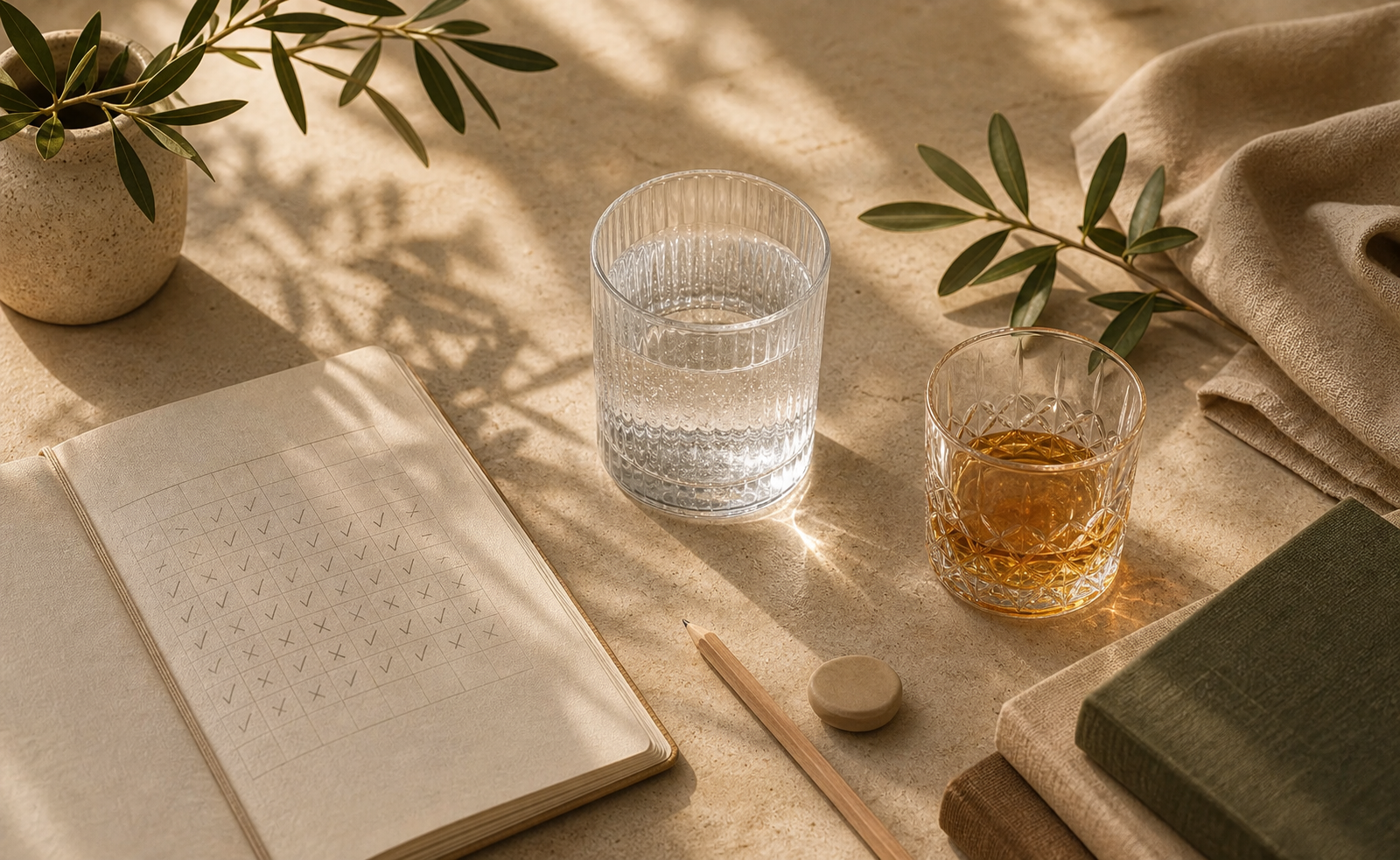
You pour a drink at 6 p.m. because it's 6 p.m., and you'd like that to change without giving up wine at dinner for good. That's where a soberish January fits. You set the limits, track what you actually drink, and keep going after a rough Thursday. A few simple rules can make the cutback stick.
TLDR:
- Soberish January means drinking less by rules you set, so one slip doesn't end the month.
- 46% of Dry January participants return to drinking, so a goal you can keep tends to last longer.
- Log one normal week, then cap below it: if you averaged 18 drinks, try 10.
- Daily heavy drinkers should see a doctor first, since withdrawal can be dangerous.
- Onir offers online naltrexone prescribing for drinking less at $99 a month in all 50 states.
What Soberish January Means
Soberish January is a month of drinking less on purpose. You still have wine at your sister's birthday. You just stop pouring one by default.
It also goes by "Damp January" or "wet January," part of a broader soberish lifestyle that pushes back on Dry January's all-or-nothing rule, where one beer on day nine counts as failure.
A soberish month might look like:
- Alcohol-free weeknights
- A two-drink cap when you're out
- A few planned zero days each week
It suits anyone whose drinking has turned automatic, and fits people who want to drink less but not quit completely.
Soberish January vs Dry January
Dry January asks for zero. Soberish January asks you to drink less, by rules you set. The gap shows most when something goes sideways.
Soberish January | Dry January | |
|---|---|---|
Goal | Cut back | No alcohol |
After a slip | Adjust and continue | "I failed" |
February | Limits often carry over | Old habits can return |
All-or-nothing rules make Dry January fragile, since one drink can end it, and plenty of participants go back to drinking once the month ends. If a full reset hasn't stuck, a goal you can keep beats a perfect month, and there are alternatives to AA built around that same flexibility.
Soberish January Benefits
The best survey data comes from Dry January, not from moderation. Alcohol Change UK surveyed people who stopped drinking for the full month and found 86% had saved money and 81% felt more in control of their drinking. Those figures describe full abstinence, not a soberish month.
Cut back hard without stopping, and many of the same changes tend to show up in smaller doses, which is the core idea behind how to drink less without quitting. You may get deeper sleep, steadier mornings, a calmer mood, and a lighter bar tab.
Does that count? Clinicians say yes. NIAAA's definition of recovery treats stopping heavy drinking as a valid outcome without full abstinence.
Who Damp January Is For and Who Should Skip It
A moderation month fits if your drinking runs on autopilot: the beer after work, the second glass because the bottle's open. It also suits a reset without rearranging your life.
If you drink heavily every day, see a physician before cutting back, because withdrawal can be dangerous. Skip the self-guided challenge if you notice:
- Shakes, sweating, or anxiety without a drink
- Morning drinking to feel steady
- Repeatedly blowing past your limits
- Hiding how much you drink
The SAMHSA National Helpline (1-800-662-4357) is free, confidential, and open 24/7.
How to Do Damp January
Start by logging every drink for one normal week, even the small ones. That's your baseline, and it's usually higher than you'd guess.

Then build the plan:
- Set a weekly cap below your baseline: averaged 18, try 10.
- Pick two or three alcohol-free days in advance.
- Alternate each drink with water or a non-alcoholic option.
- After a night that runs over, log it, take tomorrow off, keep going.
Some people add medication to cut back on drinking so willpower isn't doing all the work.
Setting Soberish Rules That Work for You
Good rules leave no room to argue with yourself at 8:45 p.m. Borrow these and adjust the numbers:
- No drinking on weeknights
- Two drinks maximum when out
- Nothing after 9 p.m.
A cap needs a consistent "drink": in the U.S., 12 ounces of beer, 5 of wine, or 1.5 of spirits. Heavy restaurant pours count double.
Write your why beside them, like better sleep. It outlasts the rule on rough Thursdays.
If a rule keeps breaking by week two, loosen it.
Handling Social Situations and Trigger Moments
Most slips start with a cue you can name in advance:
- After-work drinks, where a round appears before you've decided anything
- Dinners and weddings, with refills you never asked for
- A stressful day that seems to call for a reward
- The 6 p.m. pour you make because it's 6 p.m.
Pick your order before you walk in. Soda with lime or an NA beer works, and a full glass keeps the questions down. If someone pushes, "I'm taking it easy this month" is plenty. At home, keep the nice glass and ice, then pour something else.

Tracking Progress With a Damp January App or Journal
Track a few things each week:
- Drinks per week and alcohol-free days, so you can see the pattern
- Sleep quality, energy, and mood on the mornings after
- Money saved, which adds up faster than you'd expect
A paper journal suits handwriting fans. A notes app is quicker but won't total drinks. A dedicated damp January app adds logging, streaks, reminders, and charts.
Damp January threads on Reddit offer accountability and real stories. Quality varies, so keep what fits and skip the rest.
Alternatives to AA for People Who Want to Drink Less
AA has helped millions quit, and its free meetings are nearly everywhere. But it assumes lifelong sobriety. To drink less, try:
- Moderation Management: peer groups built around drinking limits, often starting with a 30-day break.
- SMART Recovery: skills-based meetings that welcome people still deciding.
- HAMS: harm reduction that lets you choose safer drinking, less drinking, or quitting.
- CBT with a therapist: work through triggers when drinking is tangled with stress.
- Prescribed naltrexone: blunts drinking's reward so cravings fade.
Many people combine two.
Why Willpower Alone Often Falls Short
Cutting back can feel like arguing with your own brain, partly because you are. Drinking releases endorphins that feel rewarding, so the urge returns at the same hour in the same chair.
Naltrexone, an FDA-approved medication for alcohol use disorder, blocks that reward. Drinks feel less satisfying, and cravings fade over weeks.
It isn't for everyone: skip it after recent opioid use, or with acute hepatitis or liver failure, in which case it helps to know what to try when naltrexone fails.
About 28 million Americans live with alcohol use disorder. Fewer than 3% get medication.
Keeping Your Cutback Private
If your employer is the worry, the law is mostly on your side. HIPAA protects your health information, and 42 CFR Part 2 adds federal protection for substance use treatment records, which usually can't be shared without your written consent.
Paying out of pocket for private help to drink less leaves no insurance claim. Separately, trackers and journals stay on your own device.
One real limit: filled prescriptions are recorded on the national e-prescribing network, so they may show up on a medication list even without insurance.
How Onir Supports a Damp January That Lasts
Onir is for people who want to drink less, not quit. A licensed clinician prescribes naltrexone online and shapes the plan around your goal. Most members feel alcohol's pull weaken within 10 to 14 days, when a January reset needs help reaching February.
- Free 60-second quiz, then a $19.99 clinician review, refunded if you're not approved, detailed further in Onir member reviews
- $99 a month with medication and care included, in all 50 states
- Plain, unmarked packaging, with nothing through insurance
It isn't for detox, opioid use, pregnancy, or breastfeeding.
Final Thoughts on Moderation Over Perfection
Automatic drinking is a habit, and habits respond to small, steady changes. Write down your baseline, set a cap below it, and give yourself room to adjust. If willpower keeps losing, support like naltrexone exists. Your version of soberish can start tonight.
FAQ
Can I get naltrexone prescribed online through Onir without seeing a doctor in person?
Yes. You start with a free 60-second quiz, then a $19.99 clinician review (refunded in full if you're not approved), and a licensed clinician in your state reviews your intake, usually within 24 hours, through secure text-based chat. You don't need a video call. If you're approved, a 90-day supply arrives in plain, unmarked packaging.
How long does naltrexone take to work if I start it for Damp January?
Most Onir members notice alcohol's pull weakening within 10 to 14 days, and many see better sleep and energy in the first month. If you start in early January, the medication is usually working by the time the month's motivation starts to fade.
Damp January app vs the Onir app: what's the difference?
A standalone damp January app tracks drinks, streaks, and reminders on your own. The Onir app comes with your prescription at no extra charge and adds daily check-ins, progress compared with how much you drank before starting, milestones, and messaging with your care team.
Can I use an HSA or FSA card for Onir and keep my cutback private from work?
Usually, yes. Most HSA cards work at checkout and FSA cards are accepted, though some card administrators restrict certain purchases. Onir doesn't bill insurance or share records with your job. A filled prescription can still appear on a pharmacy medication list that a doctor's office pulls.
Soberish January vs Dry January: which is better if Dry January never sticks for you?
Soberish January is usually the better fit, because a slip means you adjust the plan instead of starting over. About 46% of Dry January participants go back to drinking, so a cap you can actually keep often carries into February better than one perfect month.
What is the meaning of soberish January?
Soberish January is a month of drinking less on purpose, using rules you set yourself. That might look like alcohol-free weeknights, a two-drink cap when you're out, or a few planned zero days each week, and you can still have wine at your sister's birthday.
Is wet January the same thing as Damp January?
Yes, in the drinking sense they're the same idea: a month of cutting back instead of quitting outright. If you landed here looking for wet January weather or rainfall totals, that's a different topic. This kind of wet January is about the 6 p.m. pour, not the forecast.
How do I set a weekly drink limit for Damp January?
Log every drink for one normal week, then set your cap below that number. If you averaged 18 drinks, try 10, and count standard drinks: 12 ounces of beer, 5 of wine, or 1.5 of spirits, with heavy restaurant pours counting double.
What should you do if you blow past your limit one night during Damp January?
Log it, take the next day off, and keep going. One rough Thursday doesn't cancel the month, and if the same rule keeps breaking by week two, loosen it to something you can hold.
Are there real soberish January benefits if you don't stop drinking completely?
Yes. Cutting back hard tends to bring smaller versions of the same changes people report after a full month off, like deeper sleep, steadier mornings, a calmer mood, and a lighter bar tab. NIAAA's definition of recovery also counts stopping heavy drinking as a valid outcome without full abstinence.
Is Damp January Reddit worth using for accountability?
It can be, since Damp January threads offer real stories and people checking in on the same goal. Quality varies a lot, so keep the advice that fits your plan, skip the rest, and pair it with your own drink log so you can see your actual numbers.
What's the best way to drink less in January without relying on willpower alone?
Pair clear rules with something that eases the urge itself. Naltrexone, an FDA-approved medication for alcohol use disorder, blocks the endorphin reward from drinking so drinks feel less satisfying, and most Onir members notice the pull weakening within 10 to 14 days. Onir is $99 a month, billed as $297 every 90 days, with medication and clinician care included, and it starts with a free 60-second quiz.
Moderation Management vs SMART Recovery vs naltrexone: which should you try for cutting back?
It depends on what keeps tripping you up. Moderation Management offers peer groups built around drinking limits, SMART Recovery teaches skills-based coping in meetings, and naltrexone works on the cravings directly, so many people combine a group or therapy with medication.
Should you skip a self-guided Damp January and see a doctor first?
Yes, if you drink heavily every day, get shakes, sweating, or anxiety without a drink, or drink in the morning to feel steady, because alcohol withdrawal can be dangerous. Talk to a physician before cutting back, and know the SAMHSA National Helpline (1-800-662-4357) is free, confidential, and open 24/7.
The science behind Onir has been covered by
82%
drinking less within two weeks
30+ yrs
FDA-approved & clinically studied
1,200+
clinical studies behind it
$99
per month, shipped discreetly
In their words
“I started my medication about 8 days ago. I feel amazing. Don't really have any urges to drink alcohol.”
Keep reading
Resources
Dry January Tips That Work, Updated Nov 2026
Practical Dry January tips for November 2026, including a week-by-week guide to benefits and ways to handle tough moments.
ReadResources
Dry January Results: What to Expect in 31 Days
Explore the science behind Dry January benefits, from blood pressure to liver enzymes, in this updated November 2026 breakdown.
ReadResources
Soberish Explained: Cut Back on Drinking Without Quitting
Soberish is the middle path between quitting and drinking as usual. See how to cut back with proven strategies this October 2026.
Read