Onir Resources
Naltrexone or Ozempic for Alcohol Use Disorder?
Weighing naltrexone against semaglutide for drinking less? Compare FDA approval, clinical trial data, and cost before deciding.

By Justine Fowey, Onir Health Editorial Team
· Updated
The buzz around semaglutide and drinking is real, and so is the science behind it. But "real science" and "enough science to bet your recovery on" aren't the same thing. If you're weighing it against naltrexone, the comparison is less about which drug sounds newer and more about where the evidence actually stands right now.
TLDR:
- Naltrexone has FDA approval for alcohol use disorder since 1994 and decades of consistent trial data behind it
- Semaglutide shows early promise but lacks FDA approval for alcohol, with only small, short trials so far
- Generic naltrexone runs $25 to $60 a month; semaglutide often exceeds $1,000 and insurance won't cover off-label use
- Semaglutide makes most sense if you already take it for diabetes or weight and notice reduced drinking as a side benefit
- Onir prescribes naltrexone online in all 50 states at $99/month, with clinician care and discreet delivery included
Why This Comparison Matters Right Now
If you've seen headlines about Ozempic curbing people's desire to drink, you're not imagining a trend. Anecdotal reports started surfacing a few years ago, and now a growing body of clinical research is asking whether semaglutide, the GLP-1 drug behind Ozempic and Wegovy, could genuinely help people with alcohol use disorder. What's changed recently is that some telehealth platforms aren't waiting for the science to finish. A handful have started marketing off-label GLP-1 prescriptions for addiction, putting patients in the position of vetting an unapproved use on their own. Meanwhile, naltrexone has been FDA-approved for alcohol use disorder since 1994 and carries decades of trial data behind it.
That gap matters. One medication has a long clinical track record and regulatory backing for this specific use. The other is generating real scientific interest but remains unapproved for alcohol, with most evidence still coming from early-phase trials and observational data. If you searched "naltrexone vs semaglutide for alcohol," you're likely weighing whether the newer option is a genuine alternative or still too early to count on. The rest of this article walks through the evidence for both, side by side.
How Naltrexone Works to Reduce Alcohol Use
When you drink, your brain releases endorphins that bind to opioid receptors, creating a small reward signal that reinforces the habit over time. Naltrexone is an opioid receptor antagonist: it sits on those same receptors and blocks the endorphins from landing. The drink still happens, but the reinforcing "click" behind it doesn't.

This process is sometimes called pharmacological extinction. Because the reward loop keeps firing blanks, the brain gradually stops associating alcohol with pleasure. Cravings weaken, often within the first couple of weeks.
Naltrexone comes in two FDA-approved forms for alcohol use disorder: an oral 50 mg tablet taken daily (or, in the Sinclair Method, before drinking) and Vivitrol, a 380 mg intramuscular injection given once a month. Both have been backed by randomized controlled trials and Cochrane review evidence spanning more than three decades of clinical use.
How Semaglutide Works on Alcohol Cravings
Semaglutide is a GLP-1 receptor agonist, originally developed for type 2 diabetes (as Ozempic and Rybelsus) and obesity (as Wegovy). It mimics a gut hormone called glucagon-like peptide-1, which controls blood sugar and appetite. So how does a diabetes drug end up in conversations about drinking?
GLP-1 receptors sit in brain regions tied to reward and motivation, including areas where dopamine signaling drives cravings. The working hypothesis is that activating these receptors dials down the dopamine response to alcohol, making drinking feel less rewarding in a way that's mechanistically distinct from naltrexone's opioid receptor blockade. Animal studies have consistently shown reduced alcohol intake in rodents given GLP-1 agonists, and that preclinical signal is what pushed researchers toward human trials.
Worth being direct: semaglutide is not FDA-approved for alcohol use disorder. Any prescription for this purpose is off-label, and the clinical data, while promising, is early.
Clinical Trial Evidence for Naltrexone
Naltrexone's evidence base is unusually deep for a psychiatric medication. Dozens of randomized controlled trials have been published since its 1994 approval, and multiple Cochrane reviews have synthesized that body of work.
A 2024 JAMA systematic review and meta-analysis reinforced what earlier analyses found: naltrexone consistently reduces heavy drinking days and improves abstention rates compared with placebo. The effect sizes are modest but reliable, which is part of why naltrexone remains a first-line recommendation in clinical guidelines.
That consistency across trials, populations, and decades is the point. Few medications to cut back on alcohol have this kind of cumulative record, and it gives clinicians a level of predictability that newer candidates can't offer yet.
Clinical Trial Evidence for Semaglutide
The evidence here is real but thin. Two randomized trials stand out.
A phase 2 trial in the AJP randomized 50 adults with moderate to severe AUD to oral semaglutide or placebo for eight weeks. Semaglutide reduced heavy drinking days and drinks per drinking day while lowering naturalistic alcohol craving. It did not, however, reduce laboratory-assessed craving or overall drinks per day compared with placebo.
A separate randomized clinical trial of once-weekly injectable semaglutide in adults with AUD was published in JAMA Psychiatry. Both trials share a limitation that's hard to ignore: small sample sizes and short treatment windows, measured in weeks instead of the months or years behind naltrexone's evidence base, which is part of why some people look into alternatives to naltrexone.
Promising signals from 50-person, 8-week studies are worth watching. They are not the same thing as proven treatments.
Larger phase 3 trials are underway, and their results will determine whether semaglutide moves from "interesting" to "prescribable with confidence" for alcohol use disorder.
Side Effects: Naltrexone vs Semaglutide
Both medications can cause nausea, but the pattern differs.
Naltrexone | Semaglutide | |
|---|---|---|
Most common side effects | Nausea, fatigue, headache, reduced appetite | Nausea, vomiting, diarrhea |
Typical onset window | First 1 to 2 weeks | During dose titration (weeks to months) |
Duration | Often fades quickly | Can persist as dose increases |
Critical safety concern | Cannot take if opioids used in past 7 to 10 days | GI effects may require slow titration |
Naltrexone's side effects tend to be front-loaded. Taking it with food helps, and many clinicians suggest starting at 25 mg for a few days before moving to the full 50 mg dose. Most people find the nausea and fatigue settle within a week or two, part of a broader 90-day naltrexone timeline.
Semaglutide's GI profile is harder to outrun. Because the dose is titrated upward over several weeks, nausea and related symptoms can resurface at each step. This is a well-documented trade-off in the diabetes and obesity populations where semaglutide already has approval, and there's no reason to expect the AUD context would differ.
One safety note worth underlining: if you have any recent opioid exposure, flag that with your clinician before starting naltrexone.
FDA Approval Status and Off-Label Prescribing
Naltrexone holds FDA approval for alcohol use disorder in both its oral form (since 1994) and as the extended-release injectable Vivitrol (since 2006). That approval means it has passed large trials, safety review, labeled dosing guidelines, and post-market surveillance specific to this condition.
Semaglutide has FDA approval for type 2 diabetes and chronic weight management, but none for alcohol use disorder. When a clinician prescribes it to help someone drink less, that prescription is off-label, meaning the drug is being used for a purpose the FDA hasn't reviewed or sanctioned.
Off-label prescribing is legal and common. Doctors do it when clinical judgment and available evidence support a use that formal approval hasn't caught up to yet. But the practical consequences matter: insurance plans rarely cover off-label uses, clinical guidelines can't recommend it for AUD, and the liability picture looks different than it does with an approved indication.
Cost and Accessibility
Generic naltrexone 50 mg tablets typically cost between $25 and $60 for a 30-day supply, and most insurance plans cover them, though the naltrexone cost without insurance can vary. Semaglutide is a different story. Even at the lower doses used in alcohol research, the list price for branded semaglutide often exceeds $1,000 per month for its approved indications, and insurance is unlikely to cover an off-label use for drinking.
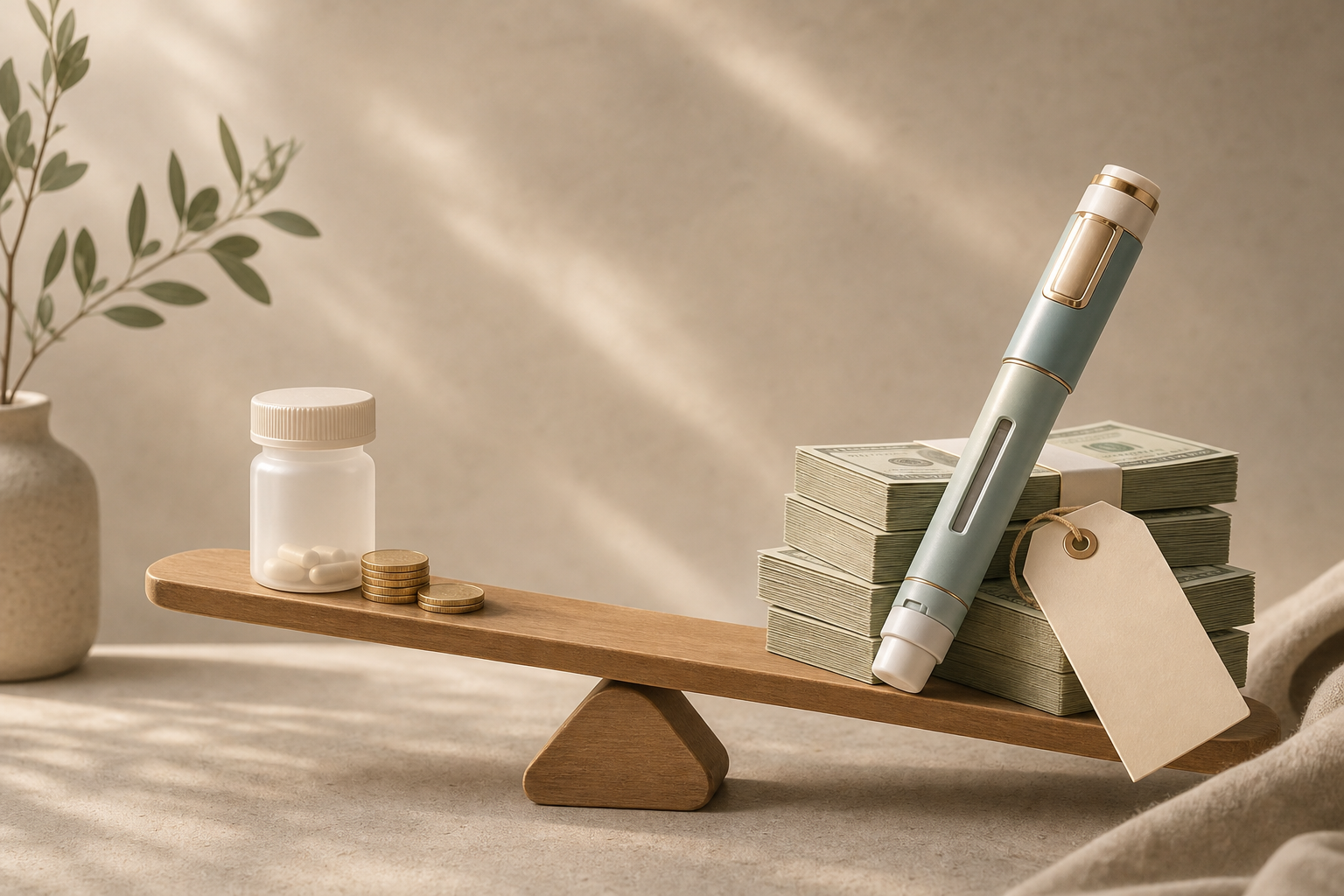
That price gap filters out most people who might be curious about semaglutide for alcohol. Recurring supply constraints on GLP-1 medications in the diabetes and weight management markets add another layer of friction.
Naltrexone, by contrast, is available through primary care, addiction specialists, and telehealth naltrexone prescriptions with minimal wait. For someone who wants to start reducing their drinking this week, the access picture is lopsided in naltrexone's favor.
Prescription Options to Reduce Drinking Without Rehab
Three medications carry FDA approval for alcohol use disorder, and all three can be prescribed in an outpatient setting.
- Naltrexone blocks opioid receptors to reduce the reinforcing effects of drinking. Available as a daily tablet or monthly injection, it's the most commonly prescribed of the three.
- Acamprosate (brand name Campral) targets glutamate and GABA systems to ease the neurological discomfort that lingers after someone stops drinking. It's typically used to support abstinence, not controlled reduction, and it requires taking two tablets three times a day.
- Disulfiram (Antabuse) takes an aversive approach: if you drink while on it, you get violently ill. That deterrent effect works for some people, but adherence tends to be the weak link since skipping a dose removes the consequence entirely, a tradeoff worth weighing when comparing Antabuse or naltrexone.
Telehealth has made all three easier to access, fitting into a broader approach to quitting drinking without rehab. A licensed clinician can review your history, prescribe the right fit, and manage follow-ups without an office visit or a rehab admission. For most people weighing naltrexone against semaglutide, the relevant context is that naltrexone, acamprosate, and disulfiram are already available, affordable, and prescribed in outpatient settings, and have been for years.
How to Choose Between Naltrexone and Semaglutide
For most people looking to drink less, the decision leans toward naltrexone. The evidence is deeper, the FDA approval is specific to alcohol, the cost is manageable, and a clinician can prescribe it today through a primary care visit or telehealth service without entering off-label territory.
Semaglutide enters the conversation when someone already takes it for diabetes or weight management and notices their drinking has dropped. In that scenario, the alcohol benefit is a bonus, not the primary reason for the prescription.
A few questions worth running through with your doctor:
- Is my primary goal reducing alcohol use, or am I also managing weight or blood sugar?
- Am I comfortable with an off-label prescription backed by small, short trials?
- Do I have any recent opioid use that would rule out naltrexone?
If your main concern is alcohol, naltrexone is the straightforward pick. The phase 3 semaglutide trials may eventually change the calculus, but they haven't reported yet.
How Onir Prescribes Naltrexone for Alcohol Reduction
If naltrexone is where the evidence pointed you, the practical question becomes how to get it without a waiting room or an awkward conversation with your regular doctor.
Onir was built around that gap. You start with a free 60-second quiz, then a $19.99 clinician review (refunded if you're not approved). A licensed clinician reviews your intake, usually within 24 hours, and if naltrexone is right for you, sends the prescription to InnovaScript, a mail-order pharmacy licensed in all 50 states and DC. Medication arrives in unmarked packaging (and it's worth knowing the difference between naltrexone and naloxone before starting). The program runs $99 a month, billed as $297 every 90 days, with clinician care included. Most members notice cravings weakening within 10 to 14 days.
Because Onir is self-pay, there's no insurance claim record from your treatment. Available in all 50 states, it's one straightforward way to start a medication with 30 years of clinical backing behind it.
Final Thoughts on Comparing Naltrexone and Semaglutide for Alcohol
Semaglutide is an interesting story still being written. Naltrexone is a finished chapter with clear results. If you want to cut back on drinking with a medication that's proven, affordable, and available now, that decision is pretty straightforward.
FAQ
Is there a prescription option to help you drink less without going to rehab?
Yes. Three FDA-approved medications for alcohol use disorder can be prescribed in an outpatient setting: naltrexone, acamprosate, and disulfiram. Naltrexone is the most commonly prescribed of the three and is available through primary care doctors or telehealth services like Onir, with no rehab admission or office visit required.
Naltrexone vs semaglutide for alcohol: which one can you actually get prescribed today?
Naltrexone. It has held FDA approval for alcohol use disorder since 1994 and is widely available as a generic for roughly $25–$60 per month. Semaglutide has no FDA approval for alcohol use, so any prescription for that purpose is off-label, often costs over $1,000 per month, and is unlikely to be covered by insurance.
Can you keep alcohol treatment private from your employer and insurance records?
Yes, if you use a self-pay service. Because Onir doesn't bill insurance, there's no insurance claim record tied to your treatment, and substance use treatment records carry extra federal protections under 42 CFR Part 2. One thing to know: a filled naltrexone prescription does appear in the national e-prescribing network (Surescripts), so it may show up on a medication list at a doctor's office.
What is naltrexone and how does it help with drinking less?
Naltrexone is an opioid receptor antagonist that blocks the small endorphin reward your brain gets when you drink. Over time, that missing reward signal weakens cravings through a process called pharmacological extinction, with many people noticing the pull of alcohol fading within the first two weeks. It's FDA-approved, non-addictive, and available as a daily 50 mg tablet or a monthly injection (Vivitrol).
Should you try semaglutide for alcohol if you're already taking it for weight loss?
If you're already on semaglutide for diabetes or weight management and you've noticed your drinking has dropped, that's worth mentioning to your doctor — the alcohol benefit may be a welcome side effect. But starting semaglutide specifically to drink less is a harder case to make right now, given the small trial sizes, short study windows, and high monthly cost compared to naltrexone.
Can I build a case for semaglutide over naltrexone if my only goal is drinking less?
Not easily, at least not right now. Naltrexone has FDA approval for alcohol use disorder, 30+ years of trial data, and costs a fraction of semaglutide. The semaglutide evidence for alcohol is limited to small, short trials, and any prescription for drinking would be off-label, often exceeding $1,000 per month with no insurance coverage for that use.
How long does it take for naltrexone to start reducing alcohol cravings?
Most people notice the pull of alcohol weakening within 10 to 14 days. Naltrexone blocks the endorphin reward your brain associates with drinking, so cravings tend to fade as that reinforcement loop stops firing. Side effects like mild nausea or fatigue are usually front-loaded in the first week or two and settle on their own.
What's the cheapest way to get naltrexone prescribed for alcohol use disorder?
Generic naltrexone 50 mg tablets typically run $25 to $60 per month through a pharmacy, and most insurance plans cover them. Telehealth services like Onir bundle FDA-approved generic naltrexone hydrochloride 50 mg tablets with clinician care for $99 a month, billed as $297 every 90 days, which can be simpler if you want everything handled in one place without an in-person visit.
Is semaglutide FDA-approved for alcohol use disorder?
No. Semaglutide is FDA-approved only for type 2 diabetes and chronic weight management. Any prescription for alcohol use is off-label, meaning the FDA has not reviewed or sanctioned it for that purpose. Larger phase 3 trials are underway, but results haven't been reported yet.
Fastest way to start medication for cutting back on drinking in 2026?
A telehealth naltrexone prescription is probably the fastest path. With Onir, you complete a free 60-second quiz, then pay the $19.99 clinician review, refunded in full if you're not approved. You typically hear back within 24 hours. If approved, a 90-day supply of FDA-approved generic naltrexone hydrochloride 50 mg tablets ships in unmarked packaging to your door. No office visit, no referral, no waiting list.
What happens if you drink while taking naltrexone?
You can still drink on naltrexone; it doesn't make you sick the way disulfiram (Antabuse) does. What it does is block the endorphin reward behind the drink, so alcohol feels less satisfying over time. That muted reward signal is what gradually weakens cravings through a process called pharmacological extinction.
Should I wait for semaglutide phase 3 trial results before choosing between naltrexone and semaglutide for alcohol?
If drinking is your main concern right now, waiting may not serve you well. Naltrexone is available today with decades of data and FDA approval for alcohol use disorder. Phase 3 semaglutide trials will add clarity when they report, but there's no published timeline for results, and no guarantee the outcomes will match the early signals.
Can you take naltrexone if you're also on pain medication?
Not if the pain medication is an opioid. Naltrexone blocks opioid receptors, so taking it within 7 to 10 days of opioid use will trigger immediate, severe withdrawal. If you use opioid-based pain medication, flag that with your clinician before starting. Non-opioid pain relievers like ibuprofen or acetaminophen are fine.
Why is semaglutide so much more expensive than naltrexone for alcohol reduction?
Semaglutide is still under patent as a branded biologic (Ozempic, Wegovy), which keeps the list price above $1,000 per month. Naltrexone has been generic since the 1990s, bringing its cost down to roughly $25 to $60 for a 30-day supply. On top of the sticker price, insurance won't cover semaglutide for an off-label alcohol use, while naltrexone for alcohol use disorder is routinely covered.
How do I know if naltrexone or semaglutide is the right fit for my situation?
Start by asking what your primary goal is. If it's reducing or stopping alcohol use, naltrexone is the straightforward choice given its FDA approval, low cost, and deep evidence base. Semaglutide makes more sense if you're already taking it for diabetes or weight management and happen to notice your drinking has dropped. A clinician can help you sort through the specifics based on your medical history.
The science behind Onir has been covered by
82%
drinking less within two weeks
30+ yrs
FDA-approved & clinically studied
1,200+
clinical studies behind it
$99
per month, shipped discreetly
In their words
“I started my medication about 8 days ago. I feel amazing. Don't really have any urges to drink alcohol.”
Keep reading
Resources
Naltrexone vs Naloxone: What's the Real Difference?
Compare naltrexone and naloxone side by side: uses, duration, and which one actually treats alcohol use disorder. October 2026
ReadResources
Naltrexone vs Vivitrol Guide
Explore the real differences between oral naltrexone and Vivitrol injections, from pricing to dosing flexibility, updated for Nov 2026.
ReadResources
Sinclair Method vs Daily Naltrexone Compared
Trying to pick between TSM and daily naltrexone? Compare the two protocols side by side, including evidence and candidacy, before deciding.
Read