Onir Resources
Why Holiday Drinking Adds Up This December
Wondering why holiday drinks add up so fast? Learn practical ways to cut back on Christmas drinking this November 2026.

By Justine Fowey, Onir Health Editorial Team
· Updated
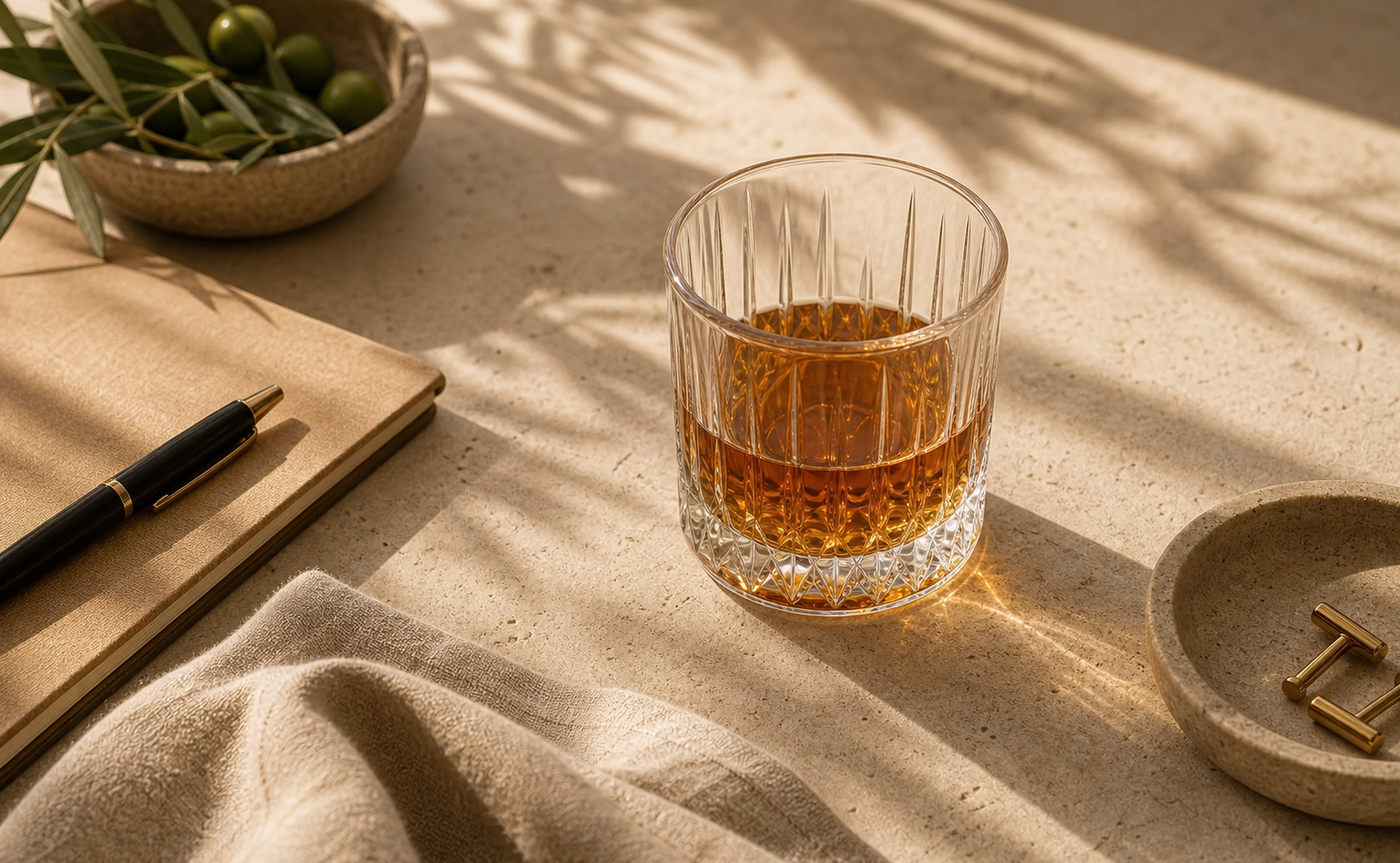
Most people don't realize how much they're drinking in December until January hits and the fog lifts. A glass here, a toast there, a nightcap because the kids finally went to sleep. None of it feels like a problem in the moment. But when you add it all up across six weeks of back-to-back gatherings, the total is usually a lot higher than you'd guess. A few practical changes can bring that number down without turning you into the person who skips every party.
TLDR:
- 55% of Americans drink more than usual during the holidays; for some, the packed December calendar can double their typical intake
- Alternate each drink with water and set a firm number before every party to cut your total roughly in half
- Two extra drinks a night for six weeks adds thousands of unplanned calories and disrupts sleep, immunity, and anxiety levels
- Naltrexone, an FDA-approved medication, lets you drink less without rehab, yet only about 2% of people who qualify receive it
- Onir ships naltrexone to all 50 states as a self-pay service, so no insurance claim or employer record is created
How Christmas Drinking Quietly Adds Up
Between Thanksgiving and New Year's, the math on drinking changes without most people noticing. An office happy hour on Tuesday, wine with the in-laws on Thursday, a neighborhood cookie swap on Saturday where someone brought spiked cider. None of those events feels excessive on its own. Stacked across five or six weeks, though, they turn occasional drinks into a nightly rhythm.
The numbers back this up. According to UCLA Health, alcohol consumption spikes during the holiday season, with some people drinking as much as double their usual intake. And an Insurance Canopy survey found that 55% of Americans drink more alcohol than usual on holidays.
What makes December tricky is the sheer density of the calendar. Family dinners, work parties, and New Year's Eve don't arrive one at a time; they overlap, often with barely a sober evening in between. A single glass at each gathering still adds up fast when the gatherings never stop.
Why the Holidays Give Your Brain Permission to Overdrink
Routine is one of the strongest brakes on how much a person drinks. Remove the morning alarm, cancel the commute, and the internal guardrails that kept weekday glasses to one or two disappear. December strips away most of those guardrails at once.
Social cover fills the gap. "It's the holidays" functions as a blanket permission slip, repeated at every party, every family dinner, every group text about what to bring. When everyone around you is drinking, saying no feels like opting out of the celebration itself. That pull is measurable: a 2024 systematic review in the journal Addiction analyzed nearly 1,000 alcohol studies and found that 86% of drinking occasions among over 60,000 adults occurred in social settings, confirming that the presence of other drinkers is one of the strongest predictors of how much any individual consumes. Family stress, loneliness, and nostalgia layer on top, each one a reliable trigger that makes reaching for a drink feel less like a choice and more like a reflex.
How Much Is Too Much During the Holidays
A "standard drink" is smaller than most people assume: 12 ounces of beer, 5 ounces of wine, or 1.5 ounces of distilled spirits. That generous holiday pour of cabernet, often 8 to 10 ounces, probably counts as closer to two.
The NIAAA's guidelines for low-risk drinking set the ceiling at no more than 4 drinks on any single day and no more than 14 per week for men, and no more than 3 on any single day and no more than 7 per week for women. During December, those weekly numbers can fill up by Wednesday. As the NIAAA notes, even a short-term increase in alcohol intake can affect sleep, mood, immunity, and judgment.
If you're looking for ways to drink less without quitting, a simple gut check works: count your drinks over any seven-day stretch this month. If the total surprises you, that gap between perception and reality is worth paying attention to.
Health Effects of Increased Holiday Drinking
Two extra drinks a night barely registers during a holiday party. Stretched over four to six weeks, those drinks compound in ways the body keeps score of even when the mind doesn't.
Sleep is usually the first casualty. Alcohol sedates, but it fragments the deeper stages of rest that actually repair the body. After a few weeks of heavier christmas drinking, you wake up at 3 a.m., groggy but wired, and the fatigue carries into the next day. Immunity takes a quieter hit: the gut lining gets irritated, inflammatory markers creep up, and that cold from your cousin's house lingers longer than it should.
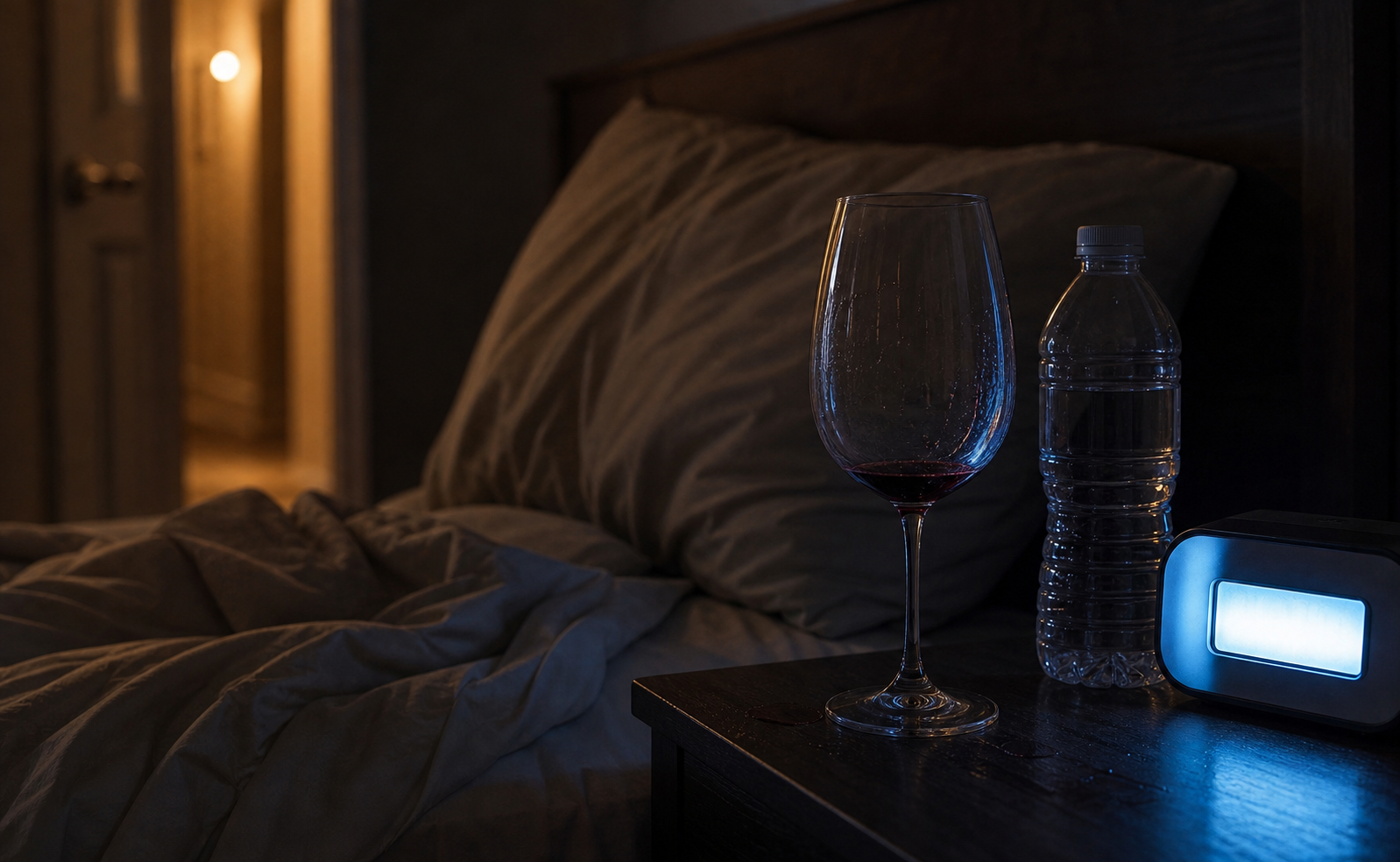
Then there's the weight. A standard glass of wine carries roughly 120 to 150 calories, and mixed holiday cocktails run much higher. Two extra drinks a night for six weeks can add several thousand unplanned calories, most of them stored as visceral fat the body is slowest to shed.
The rebound anxiety has a name in clinical circles: "hangxiety." Alcohol suppresses the nervous system while you drink, and the brain overcorrects once it clears, leaving you jittery and restless even after modest consumption. Stack enough of those mornings together and the baseline moves; you feel worse overall without any single night that seemed like a problem.
Area affected | What happens | Why it matters |
|---|---|---|
Sleep | Alcohol sedates but fragments deeper sleep stages | You wake at 3 a.m. groggy but wired; fatigue carries into the next day |
Immunity | Gut lining gets irritated, inflammatory markers rise | That cold from your cousin's house lingers longer than it should |
Weight | Two extra drinks a night add thousands of unplanned calories over six weeks | Most are stored as visceral fat the body is slowest to shed |
Anxiety | Brain overcorrects after alcohol clears, triggering "hangxiety" | Stacked mornings shift your baseline; you feel worse overall without one bad night |
Practical Strategies to Cut Back on Christmas Drinking
Set a number before you walk through the door. Decide on two drinks for the evening, say it out loud in the car if you have to, and let that number act as a ceiling, not a suggestion.

Once you're inside, alternate every alcoholic drink with a full glass of water or sparkling water with lime. The pacing alone can meaningfully reduce your total, and no one at the party notices what's in your glass.
A few more tactics that work without requiring willpower you don't have at 9 p.m.:
- Eat a real meal before you arrive. Food slows alcohol absorption and quiets the impulse to graze your way through cocktails.
- Prepare a one-liner for the refill offer. "I'm good for now" is enough. You don't owe anyone an explanation.
- Track your drinks in a notes app. The act of logging interrupts autopilot.
- Give yourself permission to leave early or skip an event entirely. Not every gathering deserves your attendance and your hangover.
The goal is a season you actually remember enjoying, not a perfect streak of zero-drink nights. Think of it as the soberish approach instead of an all-or-nothing one.
Non-Alcoholic Christmas Drinks Worth Having
The best non-alcoholic christmas drinks don't try to mimic cocktails; they stand on their own. A good one gives you something to hold, something to sip, and something that actually tastes like you chose it on purpose.
A few categories worth stocking before your next gathering:
- Sparkling water with seasonal garnishes like rosemary sprigs, cranberries, or a strip of orange peel. Simple, cold, and surprisingly festive in a wine glass.
- Non-alcoholic spirits (brands like Seedlip or Lyre's) mixed with tonic or ginger beer. These have enough complexity that you won't feel like you're drinking flavored water.
- Spiced mocktails built on apple cider, cinnamon, and a splash of ginger. Serve them warm or over ice depending on the crowd.
- Hot chocolate or warm cider, the drinks people actually get excited about regardless of whether alcohol is involved.
Bringing one of these to a party removes the awkward pause when someone offers you a drink. You already have one.
When Holiday Drinking Is Part of a Bigger Pattern
For some people, December doesn't create a new pattern. It amplifies one that was already there.
The difference between a seasonal spike and a deeper habit often shows up in the quiet moments. You came home from a party where you barely drank, then poured yourself two glasses of wine on the couch. You noticed that October's "occasional" weeknight beers had already become November's nightly routine well before the first holiday invite arrived.
A few signs worth sitting with:
- Dry days feel like something to endure instead of something unremarkable.
- You need a drink before dealing with family, not because of the holiday, but because that's how you manage stress in general.
- You've quietly set rules for yourself more than once and quietly broken them.
None of that suggests you fit a label you're not ready for. Drinking exists on a range, and the space between "I'm fine" and "I have a problem" is wide, crowded, and mostly silent. What matters is whether your drinking still feels like a choice or whether it has started to feel like a default.
Prescription Options for Drinking Less Without Rehab
If you recognized yourself in the previous section and your next thought was "but I'm not going to rehab," that's a reasonable reaction, and it's also not the only path available.
FDA-approved medication to cut back on alcohol exists for people who want to drink less without checking into a facility. Naltrexone is the most relevant. It blocks the opioid receptors that carry alcohol's reinforcing effects, the ones responsible for the small rush of pleasure that makes a second and third drink feel like a foregone conclusion. With those receptors blocked, drinking gradually loses its pull, and the automatic reach for another glass weakens over weeks.
Naltrexone doesn't require sobriety as a starting point. Many people take it while still drinking, and the medication works in the background, quietly loosening the grip over a weekly timeline. Yet of the estimated 28.9 million Americans aged 12 and older with alcohol use disorder, roughly 2% received medication in the past year.
That gap between what's available and what people actually use is enormous. The barrier usually isn't access or the naltrexone dosing involved; it's awareness that an outpatient, prescription-based option exists at all.
Keeping Treatment Private From Your Employer and Insurance
Privacy is the silent dealbreaker. Plenty of people who would otherwise seek help for their drinking never take the first step because they assume it will show up somewhere: an insurance record, an HR file, a flag that follows them into their next job.
Federal law offers more protection here than most people realize. Substance use disorder treatment records fall under 42 CFR Part 2, a regulation that goes further than standard HIPAA rules. Under Part 2, those records generally cannot be shared with anyone, including other healthcare providers, employers, or insurers, without your explicit written consent.
The practical layer matters just as much. When treatment is billed through insurance, your insurer generates an Explanation of Benefits that can be visible to the plan administrator at your workplace. Self-pay sidesteps that entirely. No claim is filed, no EOB is generated, and no record of the prescription lands in your employer-sponsored insurance system. The treatment stays between you and your provider.
How Onir Helps You Drink Less Through the Holidays and Beyond
We built Onir around the idea that changing your drinking shouldn't require announcing it to anyone or rearranging your life. You start with a free 60-second quiz, a licensed clinician reviews your intake (usually within 24 hours) as part of Onir's broader program, and if naltrexone is the right fit, a 90-day supply of FDA-approved naltrexone hydrochloride 50 mg tablets ships to your door in plain, unmarked packaging (or your clinician can discuss alternatives to naltrexone if it's not the right fit).
The membership runs $99 a month, billed as $297 every 90 days, with medication and clinician care included. It's available in all 50 states. Because Onir is self-pay, no insurance claim is filed, and your records carry the extra federal protections of 42 CFR Part 2.
Most members notice the pull of alcohol weakening within 10 to 14 days, a pattern echoed across naltrexone user reviews. Whether your goal is fewer drinks at holiday parties or something longer-term, the clinician builds the plan around where you want to go, and you can read what Onir members say about their own experience.
Final Thoughts on Cutting Back on Holiday Drinking
December moves fast, and drinks add up quietly if you're not counting. Pick one or two of the strategies above and try them at your next gathering. You don't need a perfect month, just a more intentional one.
FAQ
What is naltrexone and how does it help you drink less during the holidays?
Naltrexone is an FDA-approved, non-addictive medication that blocks the opioid receptors responsible for alcohol's pleasurable reinforcement. Over time, this weakens the automatic pull toward another drink, making it easier to stick to your limits at holiday parties or skip the nightly glass on the couch. It's been approved for over 30 years and can be taken while you're still drinking.
Oar Health vs Ria Health vs Onir for cutting back on alcohol?
All three are telehealth options that prescribe naltrexone, but they differ in structure and feel. Ria Health includes breathalyzer readings and coaching calls, which suits people who want active monitoring. Oar Health offers a similar prescription model. Onir includes the medication, clinician care, and a progress-tracking app in one subscription ($99 a month, billed as $297 every 90 days), ships in unmarked packaging, and is self-pay only, so nothing touches your insurance record.
What should I use if I want to cut back on drinking but keep it private from my employer?
Self-pay telehealth services keep treatment off your employer-sponsored insurance entirely, since no claim is filed and no Explanation of Benefits is generated. Substance use treatment records also carry extra federal protections under 42 CFR Part 2, meaning they generally can't be shared with employers or other providers without your written consent. Onir operates on a self-pay basis in all 50 states, so the only people who know are you and your clinician.
How do I know if my holiday drinking is a sign of a bigger pattern?
Count your drinks over any seven-day stretch this month and compare it to a typical week in, say, September. If dry days feel like something to endure, if you've quietly set rules for yourself and quietly broken them, or if the nightly routine started well before the first holiday invite arrived, that gap between "seasonal spike" and ongoing habit is worth paying attention to. A free 60-second quiz at Onir can help you figure out whether a prescription approach makes sense for your situation.
Is there a prescription option to help you drink less without going to rehab?
Yes. FDA-approved medications like naltrexone are designed for outpatient use and don't require sobriety as a starting point. You take the medication at home, keep your normal schedule, and the effect builds gradually over weeks. Despite roughly 28.9 million Americans meeting criteria for alcohol use disorder, only about 2% received medication in the past year, mostly because people don't know this option exists outside of a rehab setting.
Can I build a non-alcoholic drink menu for a Christmas party without any special ingredients?
Yes. Sparkling water with a rosemary sprig and a few cranberries, warm apple cider with cinnamon, or hot chocolate are all easy christmas drinks non alcoholic options you can make from grocery-store staples. Serve them in a wine glass or mug and they look just as intentional as anything on a cocktail menu.
What are some easy christmas drinks for a crowd that include both alcoholic and non-alcoholic options?
A self-serve punch station works well. Set out an easy christmas punch non alcoholic with sprite, cranberry juice, and frozen fruit alongside a separate bowl that adds vodka or rum. Guests choose their own version, and no one has to announce which one they picked.
How many calories am I actually adding with extra holiday drinks each week?
A standard glass of wine runs 120 to 150 calories, and mixed holiday cocktails can be higher. Two extra drinks a night across a six-week holiday stretch can add several thousand unplanned calories, most stored as visceral fat that's slow to shed. Tracking drinks in a notes app makes the math visible before January does it for you.
Should I try naltrexone before the holidays or wait until January?
Starting before or during the holidays can be more useful than waiting, because most members notice the pull of alcohol weakening within 10 to 14 days. That means if you begin in early December, the medication is already working by the time the densest stretch of parties arrives. There's no requirement to stop drinking first.
What's the fastest way to figure out if I'm drinking too much in December?
Count every drink over any seven-day stretch this month and compare it to a normal week from September or October. The NIAAA sets low-risk limits at no more than 14 drinks per week for men and 7 for women. If your December number surprises you, that gap between what you assumed and what you actually drank is the signal worth paying attention to.
Do traditional christmas drinks like eggnog and mulled wine count as more than one standard drink?
Often, yes. A generous pour of homemade eggnog with spirits can equal 1.5 to 2 standard drinks, and mulled wine served in large mugs easily exceeds the 5-ounce standard. Traditional christmas drinks rum-based punches are especially easy to undercount because the sweetness masks how much alcohol is in each cup.
Can I take naltrexone and still have a drink at a Christmas party?
Yes. Naltrexone doesn't force sobriety; it blocks the opioid receptors that carry alcohol's reinforcing rush, so drinking gradually loses its pull. Many people take it while still drinking, and the effect builds over weeks. Your clinician will work with you on a plan that fits your goals, whether that's fewer drinks at parties or stopping altogether.
What are some simple christmas drinking ideas that help me pace myself at parties?
Alternate every alcoholic drink with a full glass of sparkling water or club soda with lime. Set a firm number before you arrive, eat a real meal beforehand, and keep a running count in your phone. These small moves can cut your total roughly in half without anyone at the party noticing.
How does Onir keep my treatment off my insurance records?
Onir is entirely self-pay, so no insurance claim is filed and no Explanation of Benefits is generated. Your employer-sponsored plan never sees a record of the prescription. Substance use treatment records also carry extra federal protections under 42 CFR Part 2, meaning they generally can't be shared without your written consent.
What are the best christmas drinks non alcoholic that kids and adults both enjoy?
Hot chocolate, warm spiced apple cider, and sparkling cranberry-lime spritzers tend to work across all ages. For something more festive, blend frozen strawberries with lemonade and top with sprite for an easy christmas drinks for kids option that adults reach for too. The key is offering something that feels chosen, not like a consolation prize.
The science behind Onir has been covered by
82%
drinking less within two weeks
30+ yrs
FDA-approved & clinically studied
1,200+
clinical studies behind it
$99
per month, shipped discreetly
In their words
“I started my medication about 8 days ago. I feel amazing. Don't really have any urges to drink alcohol.”
Keep reading
Resources
How to Enjoy the Holidays While Drinking Less
Want to drink less this holiday season? November 2026 tips on pacing, mindful drinking, and naltrexone to ease the urge to refill.
ReadResources
A Sober New Year's Eve Guide for November 2026
Navigate New Year's Eve while drinking less with real tips on cravings, boundaries, and alcohol-free celebrations.
ReadResources
Holiday Heart Syndrome Guide for November 2026
Updated for November 2026: holiday heart syndrome symptoms, causes, diagnosis, and ways to cut back on drinking safely.
Read