Onir Resources
Best Telehealth Platforms for AUD Treatment 2026
Find the right telehealth platform for alcohol use disorder with our October 2026 comparison of cost, privacy, and medication access.

By Justine Fowey, Onir Health Editorial Team
· Updated
Most people who could benefit from medication for alcohol use disorder never get a prescription. The reasons are predictable: stigma, scheduling, insurance headaches, or just not knowing where to start. Telehealth has quietly closed a lot of those gaps, but the services out there vary more than you'd expect. We broke down six of them so you can see which ones prescribe real medication, which ones are therapy-only, and what each one will actually cost you.
TLDR:
- About 28 million Americans have AUD, yet fewer than 3% get medication for it
- We ranked six telehealth services on medication access, privacy, speed, reach, pricing, and clinical model
- Only two services prescribe naltrexone and ship to all 50 states with no insurance paper trail
- Insurance-based options can lower cost but create a claims record tied to AUD treatment
- Onir covers all 50 states at $99/mo with async clinician access and medication included
If this describes your evenings, a licensed clinician can review the rest privately. Takes 60 seconds.
What Is Telehealth for Alcohol Use Disorder?
Telehealth for alcohol use disorder connects you with licensed clinicians remotely for medication-assisted treatment, therapy, or both. Instead of visiting a clinic, you complete consultations from home and receive prescriptions by mail. For a condition that carries real stigma, that privacy matters.
The gap between need and treatment is wide. The SAMHSA National Helpline offers free referrals around the clock, but many people never make that first call. Telehealth services lower the barrier by meeting you where you already are: on your phone or laptop, often late at night when the question first feels urgent enough to act on, thanks to options that let you get naltrexone prescribed online.
How We Ranked These Telehealth Options for Alcohol Use Disorder
We scored each service across six criteria that matter most when you're weighing your options:
- Medication access: Does the service prescribe FDA-approved medications like naltrexone or acamprosate, or is it limited to therapy and coaching?
- Privacy: Is treatment self-pay with no insurance paper trail, or does billing run through your insurer? How is your data stored and shared?
- Speed to treatment: How quickly can you move from signup to a prescription in hand?
- Geographic reach: Is the service available nationwide or only in a handful of states?
- Pricing transparency: Can you find the actual cost before signing up, or do you need to book a call first?
- Clinical interaction model: Are you meeting a licensed prescriber over video, communicating through async messaging, or working with a non-prescribing coach?
No single factor should drive the decision alone. Someone in a state with limited options will weight geographic reach differently than someone in New York. If discretion is your top concern, the insurance question might outrank everything else. The list that follows applies these criteria to six services so you can compare them side by side.
Best Overall Telehealth for Alcohol Use Disorder: Onir
Onir is a direct-to-consumer telehealth service that prescribes FDA-approved generic naltrexone hydrochloride (50 mg tablets) and handles the full care journey online, from a free 60-second quiz through automatic refills and ongoing clinician support.
Core strengths
- Clinician review within 24 hours via secure, asynchronous text-based chat with a board-certified physician or physician associate licensed in your state
- $99 a month, billed as $297 every 90 days, medication and clinician care included; $19.99 clinician review refunded in full if you're not approved
- Available in all 50 states through InnovaScript, a mail-order pharmacy licensed in all 50 states and DC
- Medication shipped in plain, unmarked packaging with no insurance claim record; substance use records receive extra federal protection under 42 CFR Part 2
- Self-pay model accepts credit/debit cards, HSA, FSA, and Klarna
- Most members notice the urge to drink weakening within 7 to 14 days, with improvements in sleep and energy in the first month
- Flexible goals: drink less, take a break, or stop entirely
You can go from intake to medication in hand in roughly 5 to 7 business days. No live calls required, no insurance paperwork, and no record shared with employers or your primary care physician unless you ask.
Private clinician review, 60 seconds. See if Onir fits you.
Ria Health
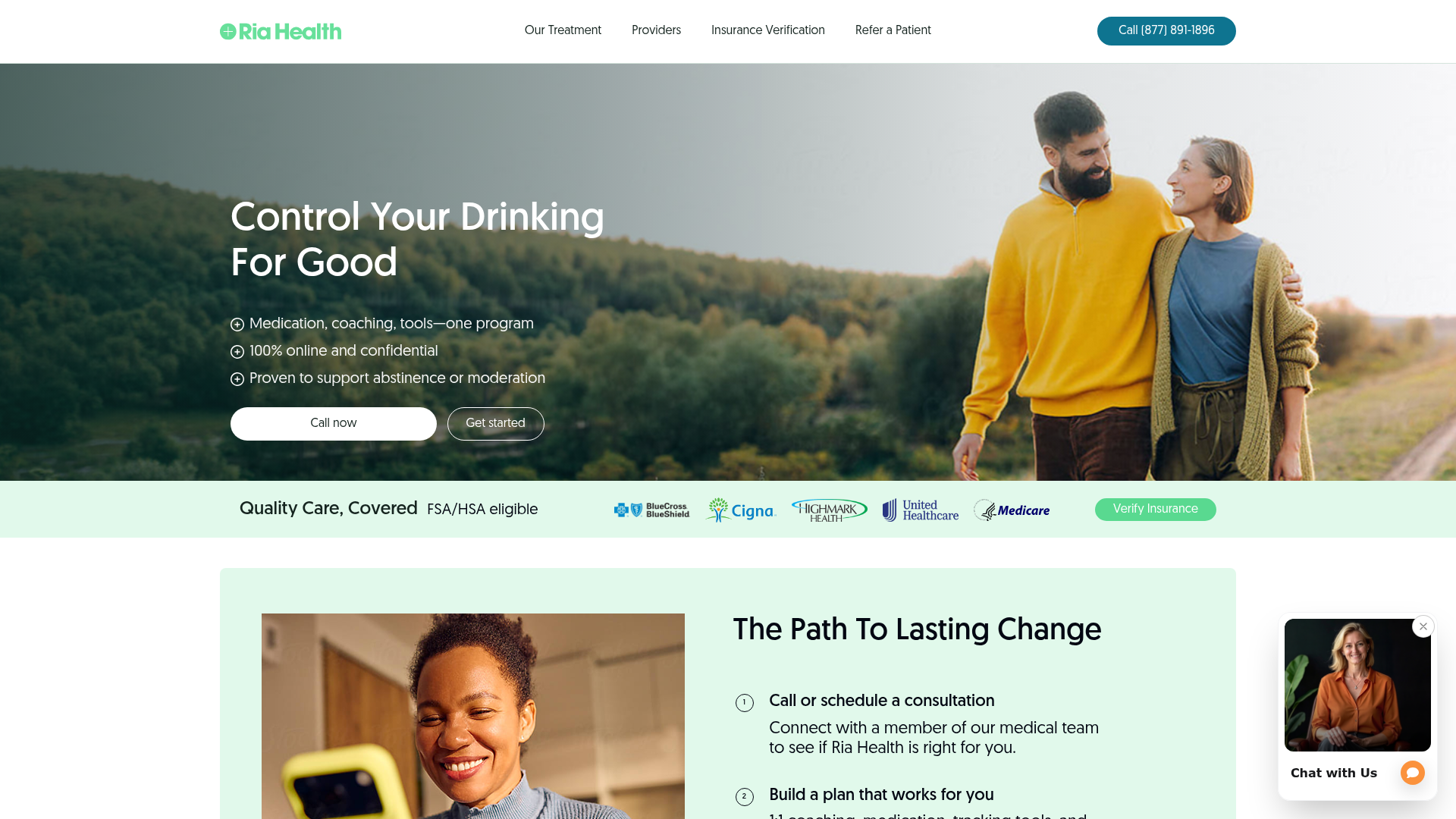
Ria Health combines medication-assisted treatment with one-on-one coaching and digital tracking tools, positioning itself as a structured clinical program for people looking to change their drinking habits.
What they offer
- Medication management including naltrexone and other FDA-approved options
- One-on-one coaching sessions alongside medical care
- Digital tracking tools to monitor drinking patterns
- Insurance billing through major payers, including several large national plans
If your insurance covers it, Ria Health can bring out-of-pocket costs down considerably. The coaching layer adds accountability that some people find helpful, especially early on, though timing your naltrexone dose correctly still matters regardless of which program you choose.
The tradeoff is privacy. Because Ria Health bills insurance for many members, claims data flows to your insurer, creating a paper trail tied to AUD treatment. For anyone who wants to keep this off the record, that's worth weighing.
There's also a scheduling consideration. The program requires live calls instead of asynchronous clinician access, which adds friction if your schedule is unpredictable.
Ria Health works well for people whose insurance covers it and who want coaching layered on top of medication. But if predictable flat-rate pricing, fast async access, and zero insurance involvement matter more to you, Onir is the simpler path.
Monument
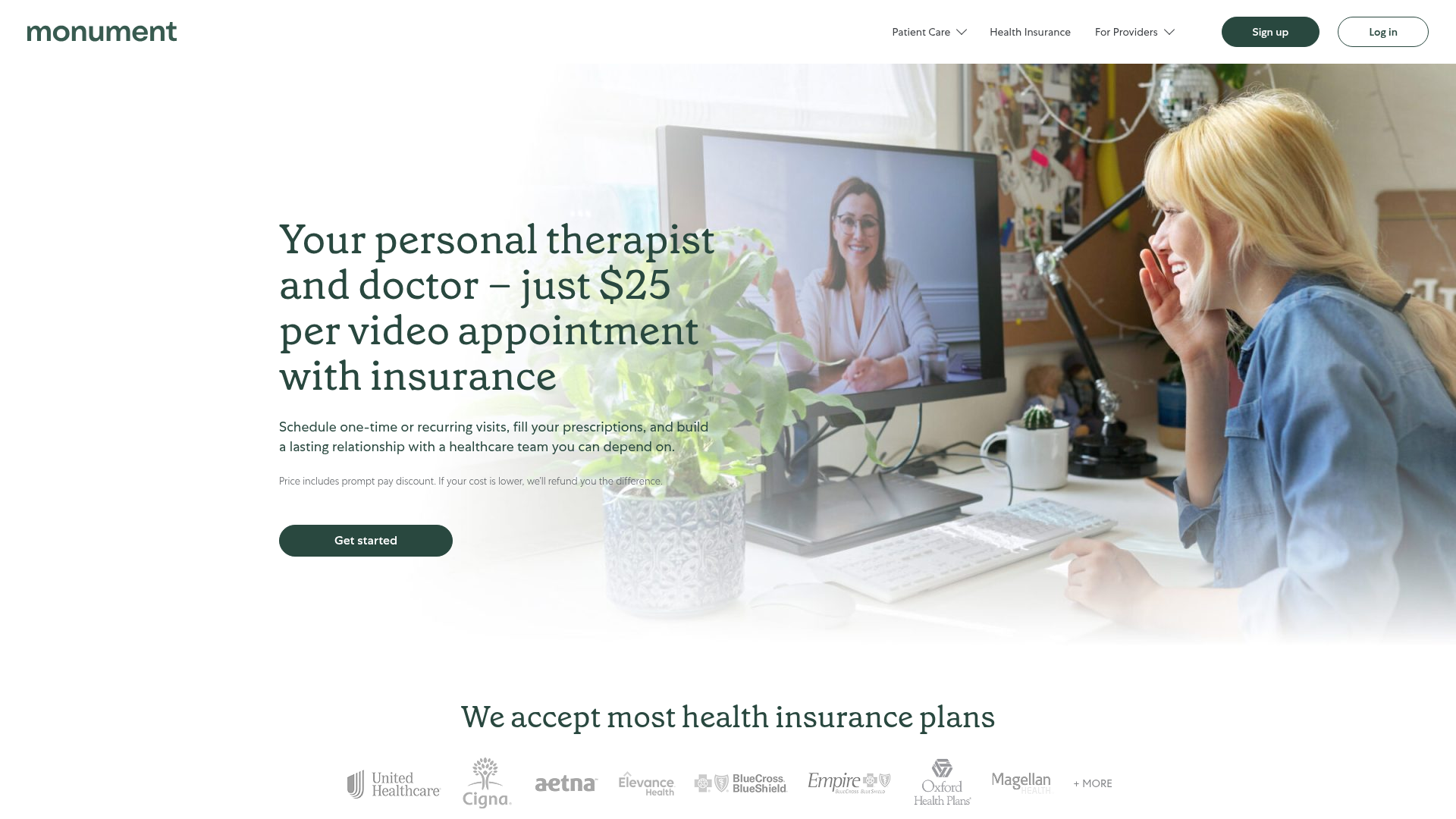
Monument is an online alcohol treatment service that pairs therapy with medication-assisted treatment and peer support. It leans therapy-forward, which sets it apart from medication-only options.
What they offer
- Virtual therapy sessions with licensed therapists who specialize in AUD
- Physician consultations for naltrexone or acamprosate prescriptions
- Therapist-moderated support groups and 24/7 community forums
- Insurance accepted for therapy sessions, with costs varying by plan and coverage
For people who want regular talk therapy and group connection woven into their treatment, Monument delivers a fuller behavioral health experience than a medication-only service can, though questions about how long to take naltrexone still apply either way.
The catch is reach. Monument is currently available in only 18 states, which rules it out for a large portion of the country. Both therapy and prescribing require live video appointments, so you'll need to work around scheduling windows. If you value async access or live somewhere Monument doesn't serve, Onir covers all 50 states without requiring a single video call.
Workit Health
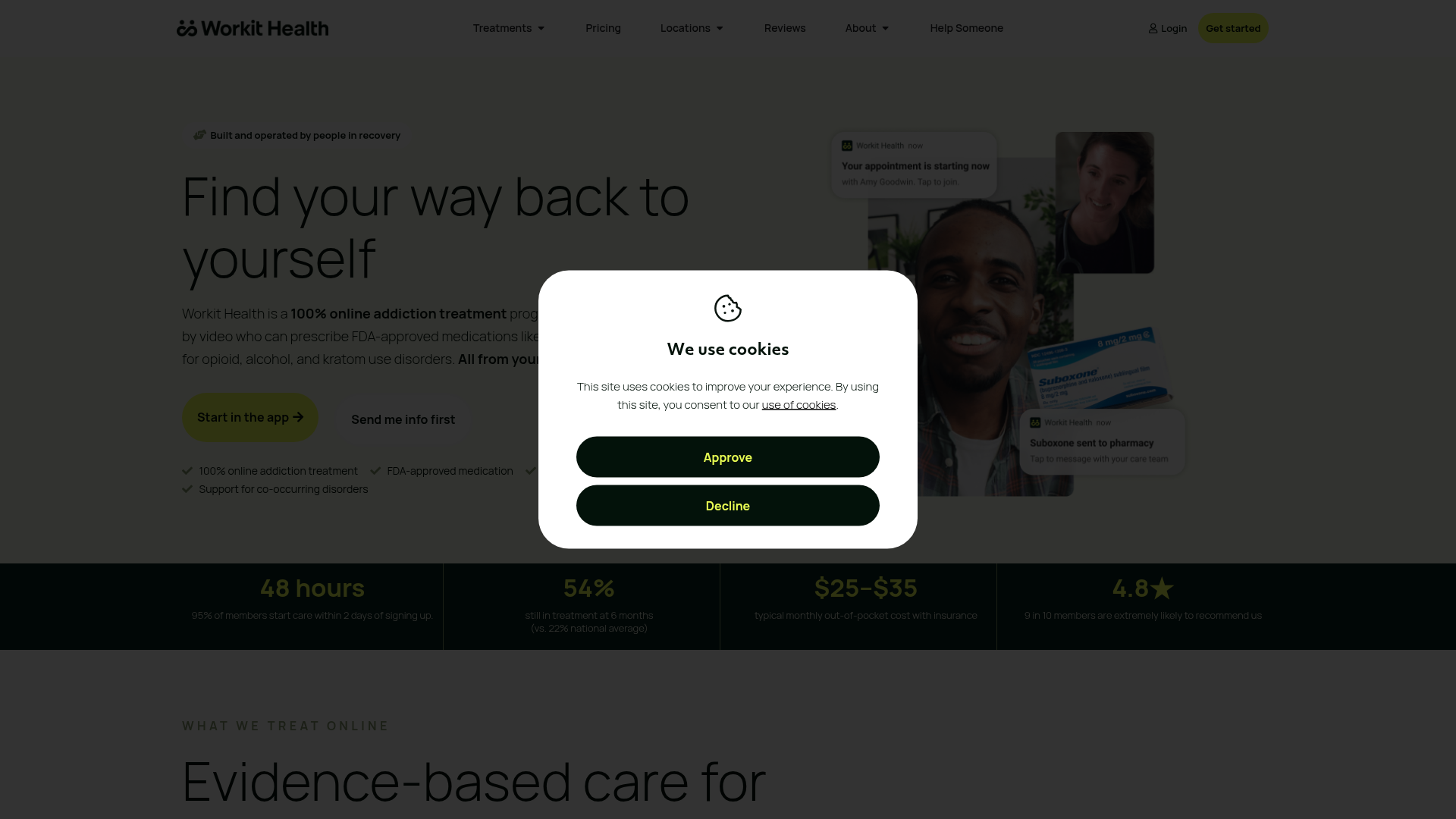
Workit Health is a telehealth service built around medication-assisted treatment for alcohol, opioid, and kratom use disorders. Its programs pair online video appointments with a companion app featuring recovery content designed by people in recovery (read a full review of Workit Health).
What they offer
- Medication support for alcohol, opioid, and kratom recovery
- Online video appointments with clinicians
- App-based recovery curriculum
- Insurance accepted in select states
If you're dealing with more than one substance, Workit Health lets you work with a single provider across conditions, which can simplify care considerably, though understanding the naltrexone work timeline is still useful before you start.
The tradeoff is focus. Because Workit Health spans multiple substance use disorders, its clinical attention is spread across conditions instead of tailored to AUD. Video appointments are required, and the service isn't available nationwide. If alcohol is your primary concern and you want async clinician access across all 50 states, Onir is the more direct fit.
Reframe
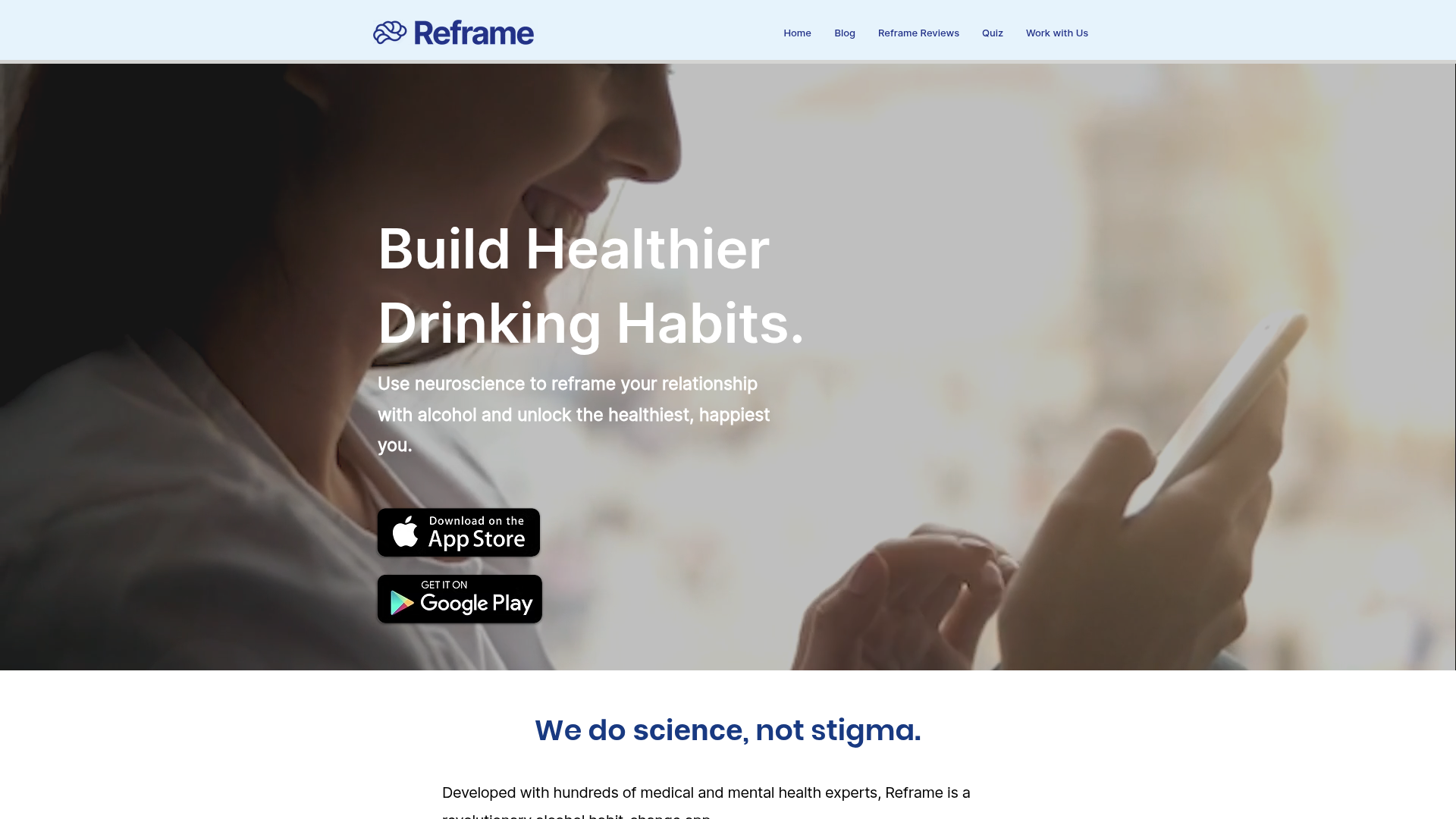
Reframe is a mobile app, not a prescribing telehealth service. It focuses on alcohol reduction through daily lessons rooted in neuroscience, drink tracking, and behavioral exercises you complete on your own schedule.
What they offer
- Daily neuroscience-based lessons and behavioral exercises paired with drink tracking and journaling tools
- Community chat groups and challenges
- Available on iOS and Android
For someone looking to build awareness around their drinking habits without involving a clinician, Reframe can be a useful starting point. The structured curriculum and tracking features help you notice patterns you might otherwise miss.
The limitation is biological. Reframe doesn't prescribe medication or connect you with a licensed clinician for medical evaluation. If your drinking involves physiological cravings, an app-only approach skips the neurological reinforcement cycle that keeps the habit locked in. FDA-approved naltrexone, which is not a controlled substance, targets that cycle directly; daily lessons, however well designed, don't.
Reframe works as a behavioral companion, but if cravings are the core problem, Onir pairs you with a licensed clinician who can prescribe naltrexone and guide you on drinking on naltrexone safely to handle what willpower and journaling can't.
Thrive Alcohol Recovery
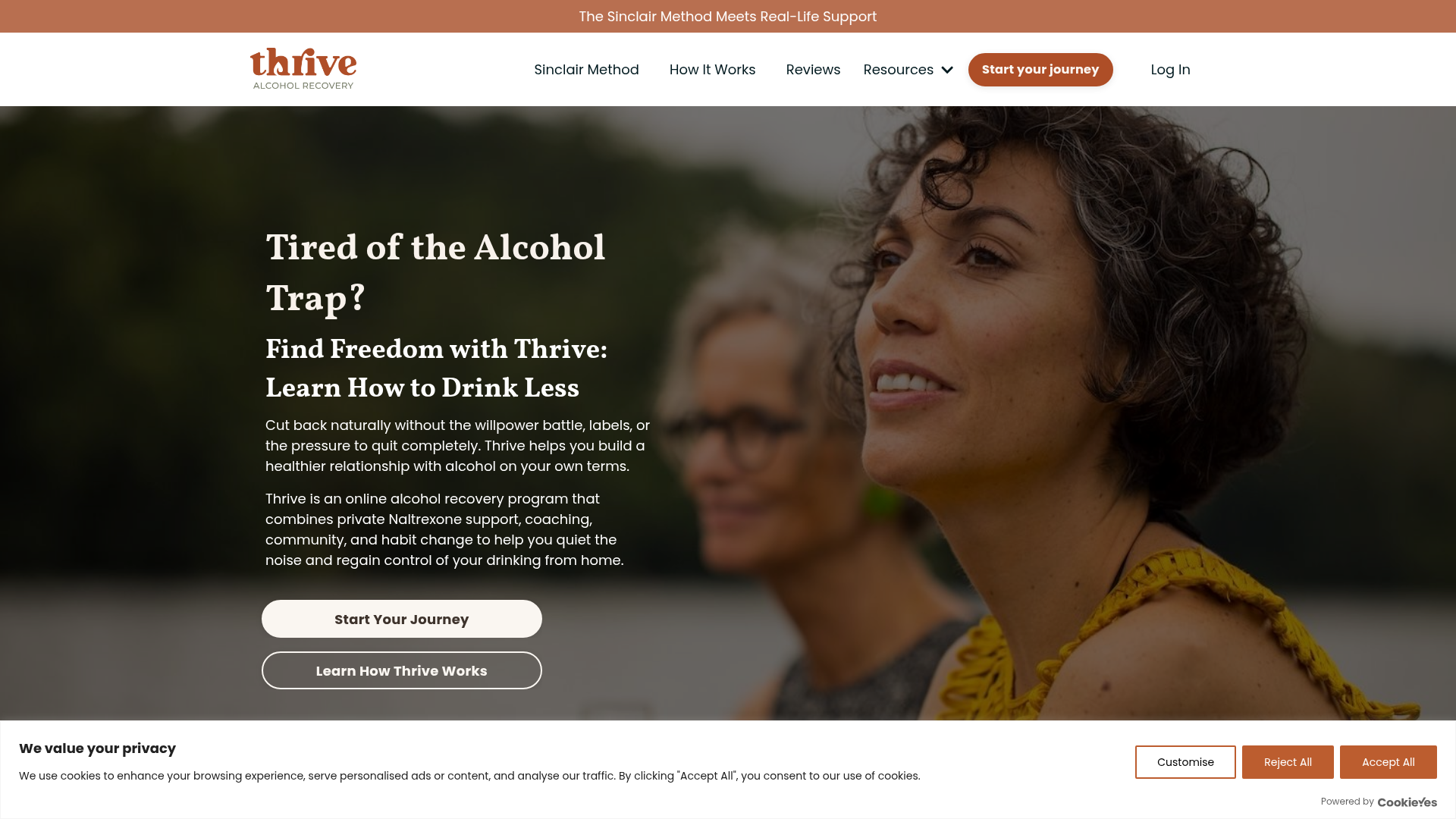
Thrive Alcohol Recovery is a counseling-centered program that offers substance use treatment and community-based recovery support. Publicly available details about its telehealth capabilities and geographic reach are limited compared to other services on this list.
What they offer
- Counseling and recovery support services
- Substance use treatment programming
- Community-based resources
For people in Thrive's service area who want a counseling-focused approach, the program may be a reasonable local option, and it's worth comparing against other Oar Health alternatives before deciding.
The difficulty is transparency. Thrive doesn't appear to offer a nationwide direct-to-consumer telehealth model with integrated medication prescribing and home delivery. Pricing, state coverage, and prescribing details are hard to find before you commit, which makes it tough to compare against other options on this list. If you want upfront costs, medication included from day one, and coverage in all 50 states, Onir gives you private help to drink less without guesswork.
Feature Comparison Table of Telehealth Services for Alcohol Use Disorder
Here's how each service stacks up across the factors that tend to matter most.
Feature | Onir | Ria Health | Monument | Workit Health | Reframe | Thrive Alcohol Recovery |
|---|---|---|---|---|---|---|
Prescribes Naltrexone | Yes | Yes | Yes | Yes | No | No |
Available in All 50 States | Yes | Varies by insurance | No (18 states) | No (select states) | Yes (app) | No (limited regions) |
Async Clinician Access | Yes | No (live calls) | No (live video) | No (live video) | No (no clinician) | No |
Insurance Required | No (self-pay) | Yes (insurance-based) | Optional | Yes (select plans) | No | Varies |
Medication Delivered to Door | Yes | Yes | Yes | Varies | N/A | No |
Transparent Flat-Rate Pricing | Yes ($99/mo) | No (varies by plan) | No (per session) | No (varies by plan) | Yes (subscription) | Not published |
Onir is the only option here that checks every box: naltrexone prescribing, all 50 states, async clinician access, self-pay privacy, home delivery, and a single published price.
Why Onir Is the Best Telehealth Option for Alcohol Use Disorder
Onir brings together the things that actually matter into one place: FDA-approved naltrexone prescribed by a licensed clinician through async chat (usually within 24 hours), coverage in all 50 states, plain packaging, no insurance paper trail, and a single price of $99 a month with medication and clinician care included. No video calls to schedule, no insurance hoops, and no guesswork about how much Onir costs.
If you're ready to see whether naltrexone is right for you, the free 60-second quiz costs nothing.
Final Thoughts on Picking the Best Telehealth for Alcohol Use Disorder
Most people spend more time thinking about this decision than the signup itself takes. That's fine. Use the comparison above to match your priorities to the service that fits, and take the first step whenever it feels right for you.
FAQ
How do I choose the right telehealth service for alcohol use disorder from this list?
Start with three filters: Does the service prescribe medication (naltrexone or acamprosate), is it available in your state, and does its billing model match your privacy needs? If you want no insurance paper trail, narrow to self-pay options like Onir or app-based tools like Reframe. If coaching or therapy matters more, Ria Health or Monument may fit better, assuming your insurance and state qualify.
Is Onir better than Ria Health if privacy is my top concern?
Yes. Onir is entirely self-pay with no insurance billing, plain unmarked packaging, and extra federal protections on substance use records under 42 CFR Part 2. Ria Health bills through insurance for many members, which means claims data tied to AUD treatment flows to your insurer and becomes part of your record.
Can Reframe replace a prescribing telehealth service like Onir or Monument?
Reframe is a behavioral app with drink tracking and daily lessons, but it does not prescribe medication or connect you with a licensed clinician. If your drinking involves strong physiological cravings, an app alone won't target the neurological reinforcement cycle the way FDA-approved naltrexone does. Reframe works well as a companion tool alongside medication, not as a standalone substitute.
When should I pick Monument or Workit Health over Onir?
Monument is a strong choice if you want regular talk therapy and group support built into your treatment and you live in one of the 18 states it covers. Workit Health makes sense if you're managing more than one substance use concern (alcohol, opioids, or kratom) and prefer a single provider across conditions. Both require live video appointments, so they suit people who want face-to-face clinical interaction over async messaging.
What does Onir cost, and are there hidden fees?
The free 60-second quiz costs nothing. The clinician review is $19.99, refunded in full if you're not approved. After approval, it's $99 a month, billed as $297 every 90 days, with medication and clinician care included. There's one plan, one price, and no separate charges for refills or follow-up visits. Onir accepts credit/debit cards, HSA, FSA, and Klarna.
Can I get naltrexone prescribed online without a video call?
Yes. Services like Onir use asynchronous text-based clinician consultations, so you never need to schedule or sit through a live video appointment. You complete an intake, a licensed clinician reviews it (usually within 24 hours), and your prescription is handled entirely through secure messaging.
What's the fastest way to get naltrexone for alcohol use disorder through telehealth?
Onir can take you from intake to medication in hand in roughly 5 to 7 business days, with clinician review typically within 24 hours. Services that require live video appointments or insurance pre-authorization tend to add extra days or weeks to the process.
Does using telehealth for alcohol use disorder show up on my insurance record?
It depends on the service. Self-pay options like Onir create no insurance claim record at all, and substance use treatment records carry extra federal protections under 42 CFR Part 2. Insurance-based services like Ria Health or Workit Health generate claims data that becomes part of your insurer's records.
Naltrexone telehealth vs in-person clinic — which is better for AUD treatment?
For most people with mild to moderate AUD who want medication, telehealth delivers the same FDA-approved naltrexone without the scheduling friction, waiting rooms, or visibility of an in-person visit. In-person care may be a better fit if you need medically supervised detox or have complex medical conditions that require hands-on evaluation.
How do I know if I need medication or just a behavioral app like Reframe?
If your drinking feels automatic or craving-driven, medication like naltrexone targets the neurological reinforcement cycle that keeps the habit locked in — something behavioral tools alone can't do. An app like Reframe can help build awareness and track patterns, but if willpower and journaling haven't been enough on their own, a prescribing service is worth considering.
Is telehealth for alcohol use disorder available in all 50 states?
Not all services cover the full country. Onir and Reframe (an app, not a prescribing service) are available in all 50 states. Monument covers 18 states, Workit Health serves select states, and Ria Health's availability varies by insurance network.
Should I pick an insurance-based AUD telehealth service or a self-pay one?
Insurance-based services like Ria Health can lower your out-of-pocket cost, but they create a claims record tied to AUD treatment that your insurer retains. Self-pay services like Onir cost a flat $99 a month with medication included and leave no insurance paper trail — a real consideration if privacy matters to you.
Can I use my HSA or FSA card to pay for telehealth alcohol treatment?
Onir accepts both HSA and FSA cards at checkout, along with standard credit and debit cards and Klarna. Payment options vary by service, so check before signing up if you plan to use a health spending account.
What is async clinician access, and why does it matter for AUD telehealth?
Async (asynchronous) clinician access means you communicate with your provider through secure messaging on your own schedule instead of booking a live video or phone call. It matters because it removes scheduling friction — you can write to your clinician at midnight if that's when the question comes up, and they respond during their clinical hours.
How long does it take to feel a difference after starting naltrexone through telehealth?
Most members notice the pull of alcohol weakening within 7 to 14 days, with improvements in sleep and energy during the first month. Results vary by person, and your prescribing clinician can adjust your plan based on how you respond.
The science behind Onir has been covered by
82%
drinking less within two weeks
30+ yrs
FDA-approved & clinically studied
1,200+
clinical studies behind it
$99
per month, shipped discreetly
In their words
“I set one alarm for 5 p.m. and stopped thinking about it. Three weeks later the second glass just wasn't interesting anymore. No willpower involved.”
Individual results vary.
A quieter next step, when you want one
If practical changes have not been enough, a licensed clinician can review the rest privately. It doesn't commit you to anything.
60 seconds · 11 questions · Fully refunded if you're not approved