Guides
How to drink less alcohol at home
Home is where drinking can become automatic. The fix is usually a better setup, not a louder promise.
By Mara Ellis for Onir
The short answer
Make the default harder and the replacement easier. Decide when drinking starts, where the bottle lives, what the first non-alcoholic option is, and what you will do during the ten minutes when the habit usually takes over.
If this describes your evenings, a licensed clinician can review the rest privately. Takes 60 seconds.
Home is where the habit gets quiet
Drinking at home is not always dramatic. That is what makes it sticky.
No bartender. No bill. No one counting. Just the kitchen light, dinner, a glass, and the same sequence you followed yesterday.
If you want to drink less at home, the answer is usually not a bigger promise. It is a better setup.
Move the start line
The first drink often decides the night.
If you usually pour while cooking, move the start line to dinner. If you pour the second you walk in, move it until after shoes are off, bag is away, dinner is started, and you have had water.
A delay is not a denial. It gives your evening one extra decision point.
Change where the bottle lives
Friction helps.
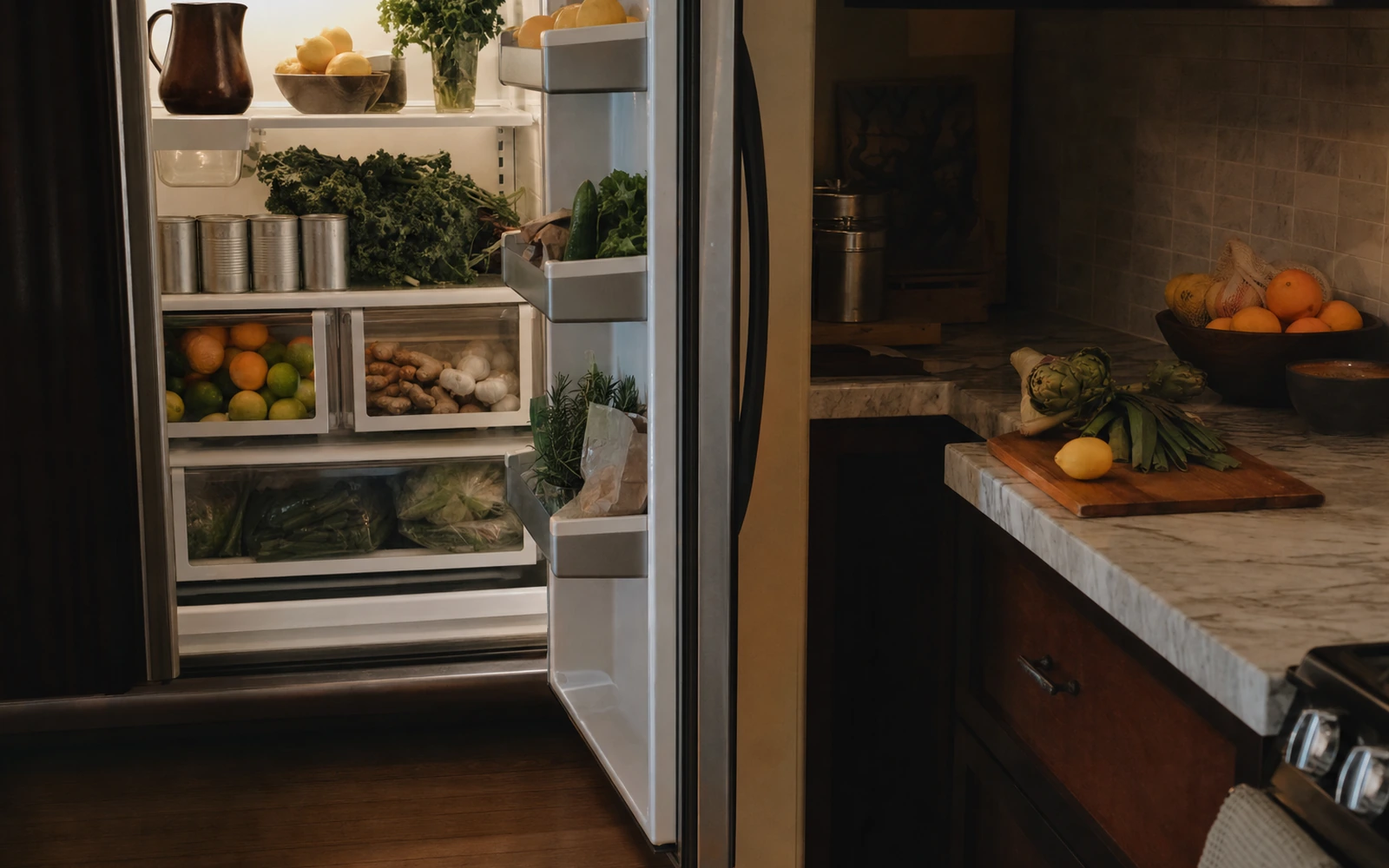
Do not keep the bottle open on the counter. Do not leave it at eye level in the refrigerator. Do not let the refill be easier than noticing you want one.
Put it away after the pour. Make the second glass require a real decision.
That small pause can do more than another rule you do not actually want to follow.
Decide the first replacement before 6 p.m.
The replacement cannot be an afterthought. By the time you want the drink, you are not in the mood to design a new life.
Pick something simple:
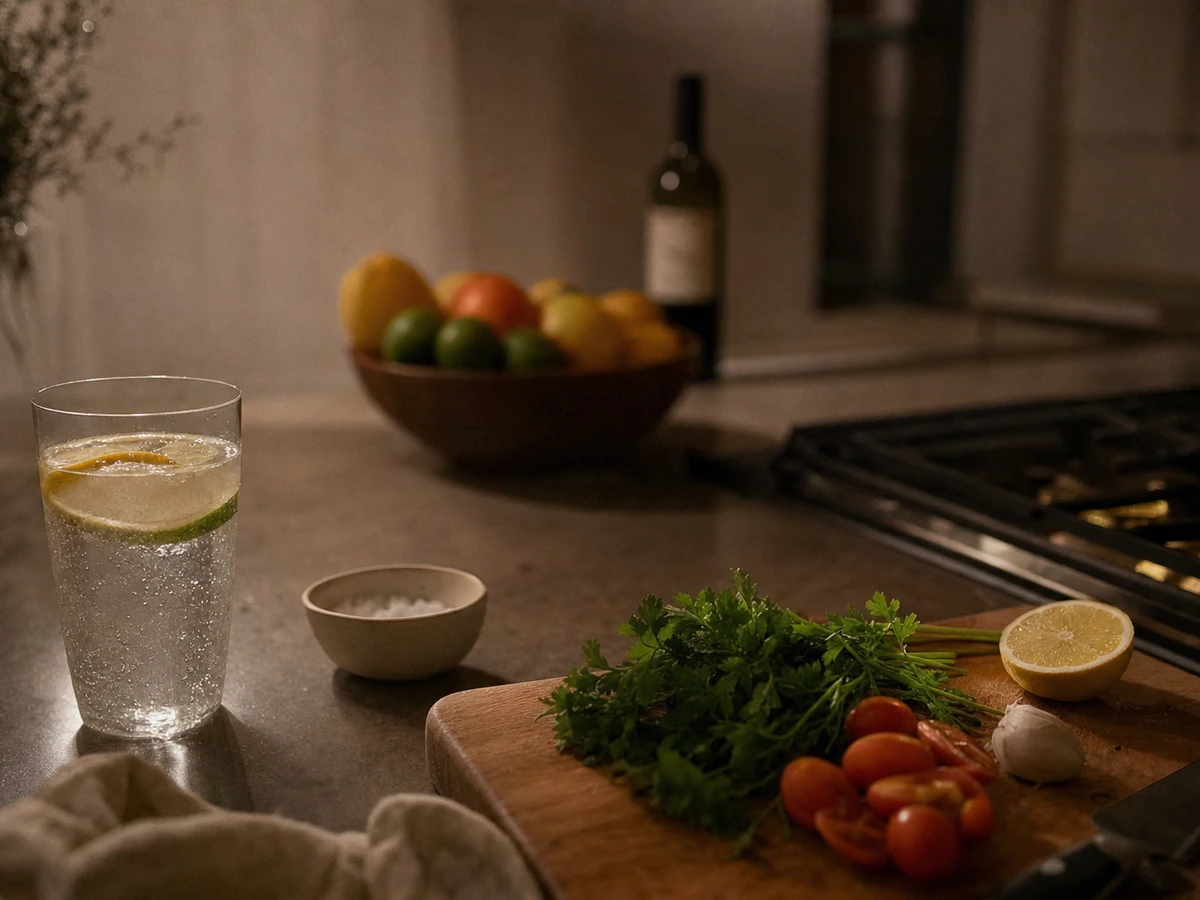
- sparkling water over ice
- tonic with lime
- tea in a real cup
- a small dessert
- a walk around the block before dinner
- a shower before the couch
The point is not to trick yourself. The point is to give your body a cue that the workday is over.
Make weeknights different from weekends
A lot of people do better with a boundary that fits the calendar.
For example:
- no wine Monday through Thursday
- wine only with dinner, not cooking
- two alcohol-free nights in a row
- one planned night, not four accidental ones
The rule should sound like something you would actually do on a tired Tuesday.
Track what comes back
Counting drinks can help, but it is not the only metric.
Track what returns when you drink less:
- easier mornings
- better sleep
- less bloating
- more patience at night
- fewer skipped workouts
- less mental bargaining
That list is more motivating than a lecture.
When home rules keep collapsing
If the same plan keeps failing in the same place, it may not be a discipline problem. It may be that the pull is stronger than the rule.
That is where private support can make sense. Onir starts with a short written assessment reviewed by a licensed clinician. If it is a fit, you can consider options privately, without turning your whole life into a public project.
The science behind Onir has been covered by
82%
drinking less within two weeks
30+ yrs
FDA-approved & clinically studied
1,200+
clinical studies behind it
$99
per month, shipped discreetly
In their words
“I set one alarm for 5 p.m. and stopped thinking about it. Three weeks later the second glass just wasn't interesting anymore. No willpower involved.”
Individual results vary.
Keep reading
Guides
How to stop drinking wine during the week
Weekday wine often marks the transition out of work. Keep the transition, change the part that costs you the morning.
ReadLifestyle
How to cut back on wine at night without making it a whole identity
A better plan for the 6 p.m. pour.
ReadLifestyle
I want to drink less, but I do not want to quit completely
Cutting back can be the whole point.
Read
A quieter next step, when you want one
If practical changes have not been enough, a licensed clinician can review the rest privately. It doesn't commit you to anything.
60 seconds · 11 questions · Fully refunded if you're not approved