Lifestyle
How to cut back on wine at night without making it a whole identity
A better plan for the 6 p.m. pour.

By Justine Fowey, Onir Health Editorial Team

The short answer
make the first pour less automatic. Change the first ten minutes, add friction around the bottle, decide what "less" means before evening, and replace the job wine has been doing.
The hard part is usually not deciding you want to drink less.
The hard part is 6:12 p.m.
Dinner is not started. Work is technically over, but your head is still in it. Someone needs something. The kitchen is too bright. The bottle is already there. One glass feels less like a decision than a transition.
That is why cutting back on wine at night is rarely solved by a better promise made in the morning.
Morning-you is reasonable. Evening-you is tired.
The plan has to work for the evening version of you.
Start with the first ten minutes
Most nightly wine habits have a starting ritual.
Walk in. Put down your bag. Open the fridge. Take out the bottle. Pour while making dinner. Drink while standing at the counter.
The ritual matters because it removes choice. Once the sequence starts, the rest follows.
Do not begin by trying to redesign your whole relationship with alcohol. Begin by interrupting the first ten minutes.
Try one of these:
- Change clothes before entering the kitchen.
- Make tea or sparkling water before opening the fridge.
- Eat something with protein before deciding about wine.
- Take the dog around the block first.
- Put the wine somewhere inconvenient, not at eye level.
- Decide the first glass cannot happen while standing up.
These are small changes. That is the point.
A small interruption gives your brain enough space to make an actual choice.
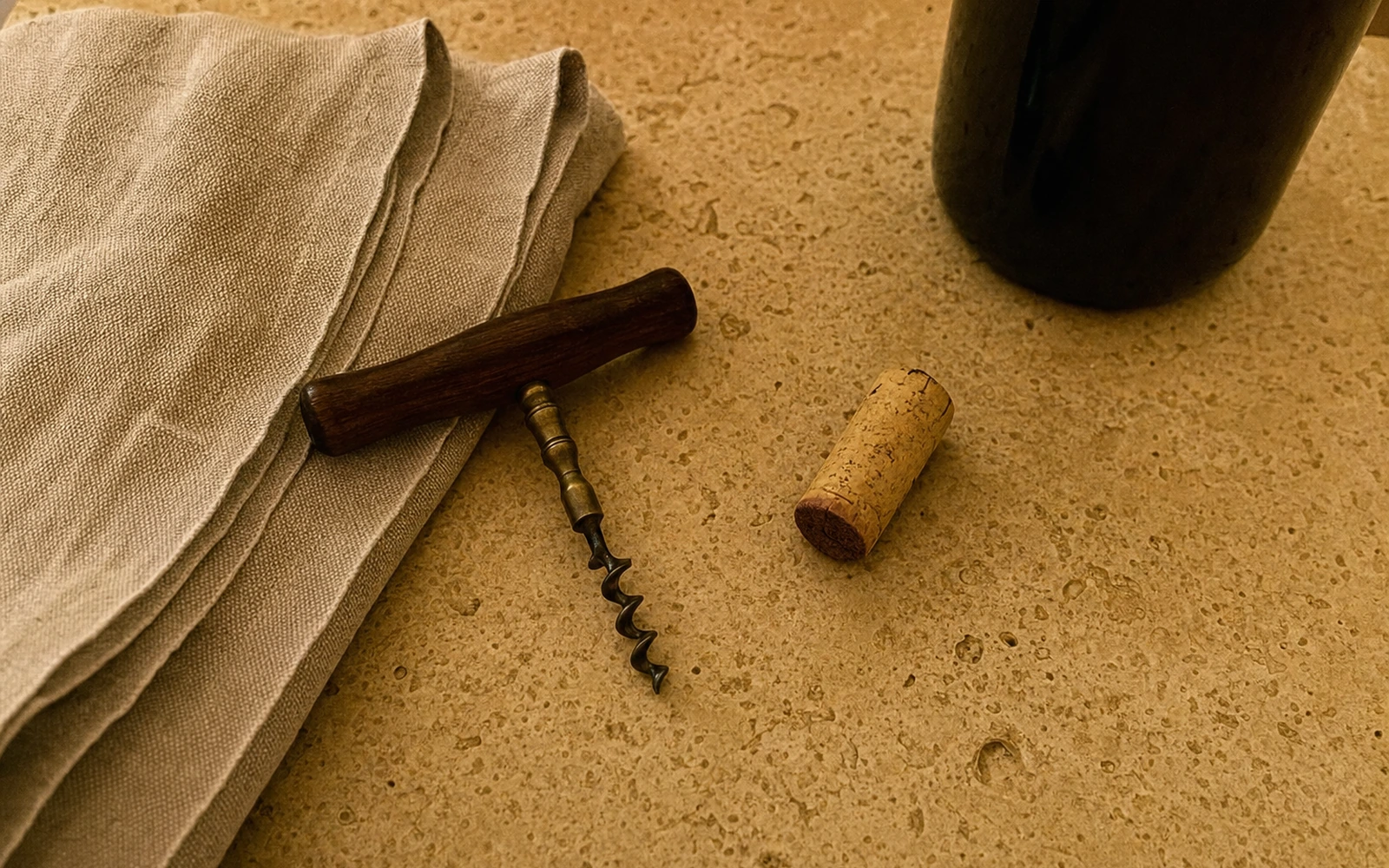
Make the bottle less automatic
If wine is open and visible, the second glass becomes easier.
That does not mean you need to remove every bottle from your home forever. It means you should be honest about friction.
Friction helps.
You can:
- buy single-serving bottles for a while
- keep wine out of the kitchen
- stop buying weekday wine at the grocery store
- pour one glass, then put the bottle away before dinner
- switch to a wine you like but do not drink quickly
- keep a non-alcoholic option already cold
The goal is not to prove you can stare down temptation. The goal is to make the unwanted version of the evening harder to slip into.
Decide what “less” means before the day gets loud
“Drink less” is too vague at 6 p.m.
Give yourself a specific rule for a specific period of time.
For example:
- no wine Monday through Thursday for two weeks
- one glass only on weeknights
- wine only with dinner, not while cooking
- no wine alone at home
- two alcohol-free nights each week
- no drinking the night before an early workout, meeting, flight, or family commitment
Pick one. Keep it boring. Make it measurable.
A clear rule lowers the amount of negotiating you have to do with yourself.
Replace the function, not just the liquid
Wine at night is often doing a job.
It marks the end of work. It softens the edge of the day. It gives your hands something to do while dinner comes together. It creates a feeling of being off-duty before the rest of the house agrees.
If you only remove the wine, the job is still open.
So replace the function.
If wine marks the end of work, create another shutdown ritual: laptop closed, phone on charger, lights lower, ten minutes outside.
If wine gives your hands something to do, make a drink that still feels like a drink: sparkling water in a real glass, tonic and lime, iced tea, something bitter, something cold.
If wine creates a pause before dinner, protect the pause. Sit down for five minutes before cooking. Do not turn the pause into another task.
The replacement does not have to be profound. It has to be available at the exact moment the old habit usually starts.
Track without turning it into a moral scorecard
For two weeks, write down three things:
- what time you had the first glass
- how many glasses you had
- what was happening right before the first one
That is enough.
Do not write essays. Do not grade yourself. Do not use the log as evidence against your character.
You are looking for patterns.
Maybe the harder nights are the ones when you skip lunch. Maybe the second glass happens only when the bottle stays on the table. Maybe Thursday is worse than Friday because you are tired of holding the week together.
Once you see the pattern, you can design around it.
Plan for the night that does not go perfectly
A lot of cut-back plans fail because one off-plan night gets treated like the whole plan is over.
That is not useful.
If you drink more than you meant to, the next question is not “what is wrong with me?”
The better questions are:
- What happened in the hour before the first glass?
- Did I eat enough?
- Was the bottle out?
- Was I alone, stressed, rushed, or trying to decompress too fast?
- What would have made the first ten minutes easier?
A useful plan survives ordinary imperfection.
When the pull is stronger than the plan
Sometimes practical changes help quickly.
Sometimes they help for a week and then the old pattern comes back.
If that has happened to you, it does not mean you did not try hard enough. It may mean the nightly habit has become reinforced enough that white-knuckling the evening is the wrong tool.
That is when getting private medical input can make sense.
Onir starts with a written assessment reviewed by a licensed clinician. No video call. No intake interview. If treatment is a fit, it is built around your goal, whether that is drinking less, taking a break, or stopping completely.
The bottom line
To cut back on wine at night, do not rely on a promise made when the house is quiet and the day has not happened yet.
Design for the moment the glass usually appears.
Change the first ten minutes. Add friction. Define what less means. Replace the job wine was doing. Track the pattern without turning it into a verdict.
You are not trying to become a different person.
You are trying to make the evening yours again.
The science behind Onir has been covered by
82%
drinking less within two weeks
30+ yrs
FDA-approved & clinically studied
1,200+
clinical studies behind it
$99
per month, shipped discreetly
In their words
“I started my medication about 8 days ago. I feel amazing. Don't really have any urges to drink alcohol.”
FAQ
Why is cutting back on wine at night so hard?
The hard part is 6:12 p.m. Dinner is not started. Work is technically over, but your head is still in it. Someone needs something. The kitchen is too bright. The bottle is already there. One glass feels less like a decision than a transition. That is why cutting back on wine at night is rarely solved by a better promise made in the morning. Morning-you is reasonable. Evening-you is tired. The plan has to work for the evening version of you.
What is the best first step to drinking less wine at night?
Start by interrupting the first ten minutes. Most nightly wine habits have a starting ritual — walk in, put down your bag, open the fridge, take out the bottle, pour while making dinner, drink while standing at the counter. The ritual matters because it removes choice. Once the sequence starts, the rest follows. Do not begin by trying to redesign your whole relationship with alcohol. Begin by interrupting the first ten minutes.
How do you make it easier to drink less without relying on willpower?
The goal is not to prove you can stare down temptation. The goal is to make the unwanted version of the evening harder to slip into. Friction helps. You can buy single-serving bottles for a while, keep wine out of the kitchen, stop buying weekday wine at the grocery store, pour one glass then put the bottle away before dinner, switch to a wine you like but do not drink quickly, or keep a non-alcoholic option already cold.
What does it mean to 'replace the function' of wine?
Wine at night is often doing a job. It marks the end of work. It softens the edge of the day. It gives your hands something to do while dinner comes together. If you only remove the wine, the job is still open. So replace the function. If wine marks the end of work, create another shutdown ritual. If wine gives your hands something to do, make a drink that still feels like a drink: sparkling water in a real glass, tonic and lime, iced tea, something bitter, something cold. The replacement does not have to be profound. It has to be available at the exact moment the old habit usually starts.
What should you do if you drink more than you planned?
A lot of cut-back plans fail because one off-plan night gets treated like the whole plan is over. That is not useful. If you drink more than you meant to, the next question is not 'what is wrong with me?' The better questions are: What happened in the hour before the first glass? Did I eat enough? Was the bottle out? Was I alone, stressed, rushed, or trying to decompress too fast? What would have made the first ten minutes easier? A useful plan survives ordinary imperfection.
How should you track your drinking without being too hard on yourself?
For two weeks, write down three things: what time you had the first glass, how many glasses you had, and what was happening right before the first one. That is enough. Do not write essays. Do not grade yourself. Do not use the log as evidence against your character. You are looking for patterns. Once you see the pattern, you can design around it.
Does cutting back on wine at night mean you have to label yourself as having a drinking problem?
No — wanting to drink less is a practical goal, not a diagnosis. Most people who cut back on nightly wine are simply noticing that the habit has become automatic and is affecting their sleep, energy, or mornings, which is reason enough to change it.
What is a realistic rule for drinking less wine on weeknights?
A rule works best when it is specific and time-bound — for example, no wine Monday through Thursday for two weeks, or one glass only on weeknights. Vague intentions like 'drink less' are easy to negotiate away at 6 p.m. when you are tired; a clear, pre-decided rule removes that negotiation.
Why do I pour a second glass of wine even when I planned not to?
The second glass is usually a friction problem, not a willpower problem — if the bottle is still on the table, reaching for it again requires almost no decision. Pouring one glass and then putting the bottle away before dinner makes the second glass a deliberate act rather than a default one.
What non-alcoholic drinks actually feel satisfying enough to replace wine at night?
The best replacements are drinks that feel like a treat rather than a consolation — sparkling water in a real glass, tonic with lime, something bitter or cold, or a warm chamomile wind-down tea. The goal is a drink that still signals 'I am off-duty,' because that transition feeling is the part wine was actually doing.
How long does it take to break a nightly wine habit?
Most people start to notice the pull of the habit weakening within two to three weeks of consistent changes, though the timeline depends on how long the habit has been in place and how much the environment is redesigned. Tracking what time you pour the first glass and what was happening right before it can reveal patterns quickly enough to design around them within the first two weeks.
Is there a medical option for people who want to drink less wine at night but keep slipping back into the habit?
Yes — naltrexone, a non-addictive FDA-approved medication with over 30 years of clinical use, works by gently blocking the brain's reinforcement signal when you drink, so the pull of the habit gradually weakens. Services like Onir handle the full process online: a written assessment, a licensed clinician review within 24 hours, and a 90-day supply shipped in unmarked packaging.
Sparkling water vs wine at night — can a swap really work for stress relief?
A straight swap rarely works on its own because it ignores the job wine was doing — marking the end of work, softening the edge of the day, or creating a moment of pause. Pairing the new drink with a real shutdown ritual (laptop closed, lights lower, five minutes outside) makes the swap far more likely to stick.
When does a nightly wine habit become something worth talking to a doctor about?
When practical changes help for a few days and then the old pattern returns, that is a reasonable signal to get private medical input — the habit may be reinforced enough that changing the environment alone is the wrong tool. A written assessment with a licensed clinician, like the one Onir offers, takes about 60 seconds and does not require a video call or a formal diagnosis to get started.
How do I stop feeling like every evening is a test of my character?
Treating every off-plan night as a moral failure makes the plan harder to follow, not easier. Tracking your patterns without judgment — just noting the time, the number of glasses, and what was happening beforehand — turns the data into something useful rather than a verdict.
Can I cut back on wine at night without telling anyone or going to a program?
Yes, and for many people privacy is the deciding factor. Adjusting your evening routine, adding friction around the bottle, and getting a clear rule in place before the day gets loud are all things you can do without any external program. If you later want medical support, services like Onir require no insurance and do not share records with employers or primary care doctors unless you ask.
Keep reading
Resources
November 2026: Drink Less Without Quitting
Drinking less without quitting is a real goal. Get a November 2026 plan for setting rules, tracking habits, and staying social.
ReadLifestyle
I want to drink less, but I do not want to quit completely
Cutting back can be the whole point.
ReadLifestyle
Why drinking wine every night starts to feel automatic
The habit usually lives in a specific hour, room, and routine.
Read