Onir Resources
Alcohol's Effects on Aging Skin and Body
See how alcohol affects skin, brain, and bone health, and how quickly your body starts to recover once you drink less. October 2026.

By Justine Fowey, Onir Health Editorial Team
· Updated
A few drinks on a Friday used to disappear by Saturday morning. Now the bloat and redness seem to hang around until Monday. If you're wondering whether alcohol is actually aging you faster or you're just getting older, the answer is a little bit of both. What's worth knowing is where the line sits between reversible and permanent, because that changes what you do next.
TLDR:
- Alcohol causally shortens telomeres and speeds biological aging at the cellular level
- Your face shows it first: puffiness, redness, broken capillaries, and collagen loss
- Even moderate drinking moves the needle on DNA methylation age markers
- After 40, your body holds less water and clears alcohol slower, so the same drinks hit harder
- Onir prescribes naltrexone online at $99/month to help you drink less and slow the damage
If this describes your evenings, a licensed clinician can review the rest privately. Takes 60 seconds.
The Science Behind Alcohol and Biological Aging
Your chronological age is just the number of candles on the cake. Biological age reflects how worn down your cells actually are, measured through markers like DNA methylation patterns and telomere length. Heavy drinking widens the gap between the two.
A large genetic study from Oxford Population Health, published in Molecular Psychiatry, used Mendelian randomization to analyze over 245,000 UK Biobank participants and found a causal relationship between alcohol use disorder and shorter telomeres. Telomeres are the protective caps on your chromosomes; as they shorten, cells age faster and become less able to repair themselves.
A Northwestern Medicine study added another layer: long-term drinking and binge drinking both speed up biological aging through epigenetic age acceleration, where chemical tags on your DNA shift in ways that mimic someone years older. So when people ask whether alcohol ages you, the cellular evidence is pretty unambiguous. It does.
How Alcohol Ages Your Face and Skin
Alcohol pulls water out of your body, and your skin pays for it first. When you're dehydrated, skin loses its plumpness and takes on a dull, flat quality that makes fine lines more obvious. The face shows this faster than almost anywhere else because facial skin is thinner, with more visible blood vessels sitting closer to the surface.
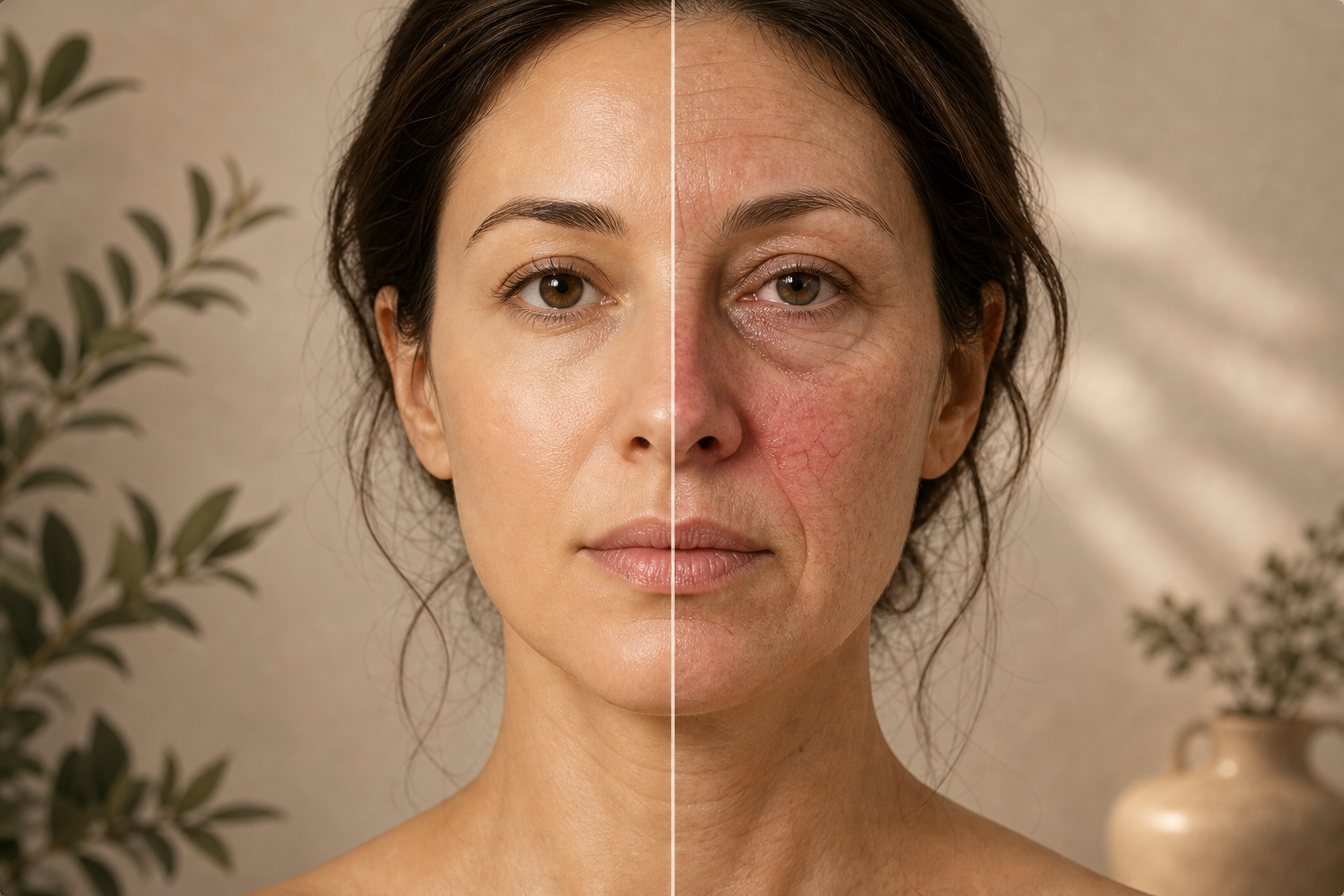
Those blood vessels matter for another reason. Alcohol dilates them, which is why your cheeks flush after a couple of drinks, an effect you can already notice within 4 days without drinking. Over time, repeated dilation weakens vessel walls and leads to persistent redness and broken capillaries, especially across the nose and cheeks. For people with rosacea, drinking can trigger flare-ups that worsen both redness and skin texture.
Puffiness adds to the picture. Alcohol disrupts your body's fluid balance, causing water retention around the eyes and jawline. Pair that with the inflammatory response alcohol triggers, and you get a swollen, bloated look that can linger well into the next day.
Collagen breakdown ties it all together. Alcohol generates free radicals and depletes nutrients like vitamin A and zinc that your skin needs to rebuild collagen fibers. As collagen degrades, wrinkles deepen and skin starts to sag.
The cumulative result is what people recognize in before-and-after comparisons: a face that looks puffier, redder, and noticeably older than the person's actual age.
Alcohol's Effects on Your Liver, Brain, and Bones
Skin changes are visible, but the damage running underneath is often more consequential. Alcohol's internal toll accumulates quietly, organ by organ, over years and decades.
Your liver takes the first hit because it handles roughly 90% of alcohol metabolism. Fat builds up in liver cells early on, a reversible condition called fatty liver. Keep drinking, and inflammation progresses to fibrosis. After 20 or 30 years of heavy use, fibrosis can advance to cirrhosis, where the liver can no longer filter toxins or produce proteins your body depends on.
The brain shrinks too. Chronic alcohol use reduces volume in the prefrontal cortex and hippocampus, areas responsible for decision-making and memory. People drinking heavily for decades often show cognitive decline that outpaces normal aging.
Bones get weaker in parallel, and cutting back can also mean fewer calories from alcohol. Alcohol interferes with calcium absorption and disrupts hormones that control bone remodeling. Fracture risk climbs, especially for people over 50 already losing bone mass naturally.
Then there's sleep. Alcohol may help you fall asleep faster, but it fragments deeper stages, particularly REM, that your body needs for cellular repair. Night after night, poor sleep compounds every other form of damage on this list.
Private clinician review, 60 seconds. See if Onir fits you.
Does Moderate Drinking Still Age You?
The short answer is yes, though the effect is smaller than what you'd see with heavy or binge drinking.
For years, a glass of red wine at dinner carried an almost medicinal reputation. That narrative has eroded steadily. Large-scale reviews found that earlier studies suggesting moderate drinking was protective often suffered from methodological flaws, including comparing moderate drinkers against "non-drinkers" who had actually quit due to illness. When researchers corrected for that bias, the apparent health benefits largely disappeared.
On the aging question, the Northwestern epigenetic study found that cumulative alcohol consumption, including moderate use, influenced biological age markers. Even patterns well below binge thresholds moved the needle on DNA methylation clocks. The effect was dose-dependent: more drinks over a lifetime meant more epigenetic acceleration, with no clear floor where the impact dropped to zero.
Does that mean a single glass of wine on Saturday night is meaningfully aging you? Probably not in any way you'd notice, which is why many people simply want to drink less without quitting entirely. But the idea of a "safe" amount that carries zero biological cost doesn't hold up well under current evidence. If you're drinking moderately and wondering whether it counts, the frank answer is that it counts a little.
Why Alcohol Hits Harder After 40, 50, and Beyond
Your body's relationship with alcohol changes as you age, and the reasons are physical. After 40, body composition changes: you carry proportionally more fat and less water, so alcohol concentrates in a smaller fluid volume and hits your bloodstream harder. The same two glasses of wine at 55 produce a higher blood alcohol level than they did at 35, even if your weight hasn't changed.
Liver enzyme activity slows too. The enzymes that break down alcohol, particularly alcohol dehydrogenase, become less efficient, so your body clears alcohol more slowly. According to Cleveland Clinic geriatrician Kenneth Koncilja, MD, alcohol processing changes with age, and the sensitivity is real, not imagined.
Medication interactions compound everything, which is worth keeping in mind if you're following a naltrexone timeline over 90 days. By 60, many people take at least one daily prescription. Alcohol interacts with hundreds of common medications, amplifying sedation, raising fall risk, or interfering with how the drug works. For someone over 70, even a single drink alongside a blood thinner or sleep aid can create serious problems.
The central nervous system grows more vulnerable with age as well. Fewer neurons, reduced neurotransmitter production, and a brain already losing volume make older adults more susceptible to alcohol-related confusion, balance issues, and cognitive impairment. Falls are a particular concern: alcohol impairs coordination in anyone, but for someone with age-related bone loss, a fall can mean a hip fracture, not a bruise.
Alcohol vs. Smoking: Which Ages You Faster?
Both habits age you, but they attack through different pathways, and the comparison isn't as simple as picking a winner.
Smoking starves your skin from the inside out. Nicotine constricts blood vessels, cutting oxygen and nutrient delivery to the outer layers. The thousands of chemicals in cigarette smoke generate free radicals that break down collagen and elastin directly, producing what dermatologists sometimes call "smoker's face": deep lines around the lips, crow's feet, a grayish complexion, and skin that looks thin and papery years ahead of schedule.
Alcohol ages you differently. Dehydration, chronic inflammation, and nutrient depletion do most of the work. Where smoking narrows blood vessels, alcohol dilates them, causing redness and broken capillaries instead of pallor. The visual signatures are distinct: puffiness and ruddiness versus hollowness and sallowness.
Dose and duration make the comparison tricky. A pack a day for 20 years will generally produce more dramatic facial aging than moderate weekend drinking over the same span. But heavy daily drinking for decades can rival or exceed that damage, especially when you factor in liver and brain toll.
The worst outcome belongs to people who do both. Studies on identical twins found that the twin who smoked or drank more displayed visibly older facial features, a reminder of why it helps to know what naltrexone feels like day by day before starting, and combining the two amplified aging beyond what either produced alone. Alcohol impairs antioxidant defenses that might buffer smoking's oxidative damage, while smoking slows the blood flow needed to repair alcohol-related inflammation.
Can You Reverse Aging From Alcohol?
Some damage reverses surprisingly fast. Other changes need months, and a few may be permanent depending on how long and how heavily you drank.
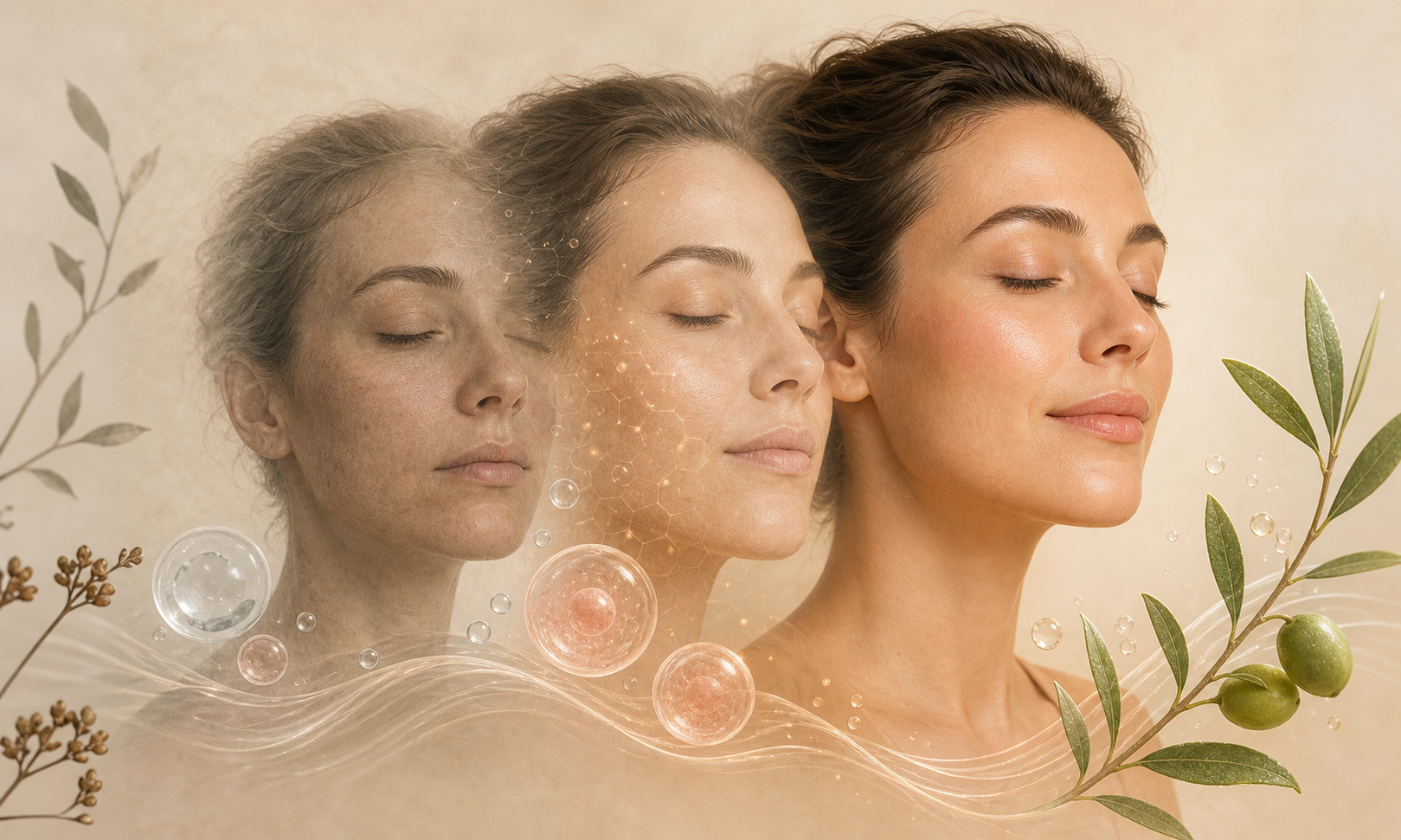
In the first 72 hours after quitting, your body starts rebalancing fluids. Puffiness around the eyes and jawline decreases as your kidneys stop working overtime to manage alcohol's diuretic effect. Skin starts to look less flat and sallow.
By two to four weeks, sleep quality picks up noticeably, which matters because deep sleep is when your body does its most active cellular repair. Redness fades as blood vessels stop being dilated nightly. Many people report more even skin tone and less pronounced under-eye circles around this point.
At three to six months, collagen production begins to stabilize as nutrient absorption (particularly vitamin A and zinc) normalizes. Liver enzymes can return to healthy ranges if damage hasn't progressed past fatty liver or early fibrosis. According to Johns Hopkins, the liver has a remarkable ability to regenerate when given the chance.
Timeframe | What Improves | Why It Happens |
|---|---|---|
First 72 hours | Puffiness decreases, skin looks less flat and sallow | Kidneys rebalance fluids as alcohol's diuretic effect stops |
2 to 4 weeks | Redness fades, more even skin tone, less pronounced under-eye circles | Blood vessels stop being dilated nightly; deeper sleep supports cellular repair |
3 to 6 months | Collagen production stabilizes, liver enzymes can return to healthy ranges | Vitamin A and zinc absorption normalizes; liver regenerates if damage is early-stage |
One thing that trips people up: the first week or two can actually make you look worse, which is one reason some people choose to taper off alcohol at home gradually. Fluid redistribution, stress hormones spiking during withdrawal, and disrupted sleep create a temporary rough patch. This is the "why do I look worse after quitting drinking" phenomenon that comes up constantly on Reddit. It passes. The people posting 30-day or 60-day comparison photos didn't look great on day three either.
Practical Ways to Cut Back on Drinking
You don't have to swear off alcohol entirely to slow the aging effects covered above, and learning how to drink less without quitting can make the shift easier. Small, consistent changes tend to stick better than dramatic overhauls anyway.
- Track what you actually drink. Most people underestimate by a wide margin. A simple note on your phone after each drink gives you real data to work with.
- Set weeknight boundaries. Picking three or four alcohol-free days each week creates a baseline your body can recover around.
- Alternate every alcoholic drink with a glass of water. This cuts your total intake roughly in half on any given night without requiring willpower at every sip.
- Identify your triggers. Boredom, stress, and social pressure each call for different responses. If you always pour a drink at 6 p.m. out of habit, replacing that cue with a walk or sparkling water can interrupt the loop.
For some people, behavioral strategies alone aren't enough. FDA-approved medications like naltrexone can help reduce drinking urges by blocking the reinforcement your brain gets from alcohol. They work alongside your own effort, and a growing number of people use them to cut back, not to quit completely.
How Onir Helps People Drink Less and Reclaim Their Health
If the aging effects in this article hit close to home, the practical next step is figuring out what actually helps you drink less. That's where we come in.
Onir prescribes naltrexone, medication to quit or cut back drinking, an FDA-approved option that blocks the endorphin hit your brain gets when you drink. Without that reinforcement, alcohol starts to feel less automatic, less rewarding. Most members notice the pull weakening within 10 to 14 days, and many report better sleep and more energy inside the first month.
The process is simple and stays online. You start with a free 60-second quiz, then a $19.99 clinician review (refunded in full if you're not approved). Once prescribed, medication and ongoing clinician care run $99 a month, billed as $297 every 90 days. Everything ships in plain, unmarked packaging with no insurance paperwork and no record shared with your employer or primary care doctor.
You don't need to identify as someone with a drinking problem to use Onir, and our guide to quitting drinking without rehab covers other options too. You just need to want the habit to loosen its grip.
Final Thoughts on Whether Alcohol Ages You Faster
The research points one way: alcohol ages your face, your brain, your bones, and your cells. The encouraging part is that your body starts repairing itself quickly once you drink less. You don't need a dramatic overhaul to see real results.
FAQ
How long does it take to look better in the face after quitting alcohol?
Most people notice reduced puffiness and better skin tone within two to four weeks. Fluid redistribution happens in the first 72 hours, but redness and under-eye circles take longer to fade as blood vessels recover and sleep quality improves. Don't be discouraged if the first week looks rough — that temporary "worse before better" phase passes quickly.
Can you reverse skin aging from alcohol, or is the damage permanent?
A good amount of it reverses, especially if you stop or cut back before liver damage progresses past the early stages. Dehydration, puffiness, and redness can improve within weeks; collagen production begins to stabilize around three to six months as nutrient absorption normalizes. Damage like deep wrinkles or broken capillaries from decades of heavy drinking may only partially recover.
Best telehealth options for cutting back on drinking without insurance paperwork?
Onir is built for exactly this scenario — it's self-pay ($99 a month, billed as $297 every 90 days), ships naltrexone in unmarked packaging, and creates no insurance record. Other telehealth services like Oar Health and Ria Health also prescribe medication for alcohol use disorder online, though coverage, pricing, and privacy handling vary. If keeping treatment off your insurance matters to you, confirm that with any provider before signing up.
Why do I feel like I need a drink even when I don't really want one?
That disconnect is the endorphin loop at work. When you drink, your brain releases a reinforcement signal that makes the behavior feel automatic over time — independent of whether you consciously enjoy it. FDA-approved medications like naltrexone (prescribed through services like Onir) block that reinforcement, which is why many people describe the urge simply loosening rather than requiring constant willpower to override.
Does moderate drinking or wine still age your face?
Yes, though the effect is smaller than heavy or binge drinking. The Northwestern epigenetic study found that cumulative alcohol intake — not just heavy use — shifted biological age markers in a dose-dependent way, with no clear threshold where the impact hit zero. A single glass of wine on the weekend probably won't produce visible aging, but the idea that moderate drinking carries zero biological cost doesn't hold up under current research.
Does alcohol age your body beyond just your skin?
Yes. Alcohol accelerates aging across multiple organ systems. Your liver accumulates fat and can progress to fibrosis or cirrhosis over decades of heavy use, your brain loses volume in areas tied to memory and decision-making, and your bones weaken as alcohol interferes with calcium absorption. Sleep fragmentation compounds all of it by reducing the deep rest your body needs for cellular repair.
Why do I look worse after quitting drinking instead of better?
In the first week or two, fluid redistribution, spiking stress hormones, and disrupted sleep create a temporary rough patch that can actually make your face look puffier or more tired. This is well-documented and passes quickly. Most people see noticeable improvement in skin tone and reduced puffiness by weeks two through four.
Does beer age you the same way as liquor or wine?
The aging effect comes from alcohol itself, not the specific drink. Beer, wine, and spirits all cause dehydration, inflammation, collagen breakdown, and epigenetic age acceleration in proportion to how much alcohol they deliver. A higher cumulative intake over your lifetime means more biological aging, regardless of what's in the glass.
At what age does alcohol tolerance go down, and why?
Tolerance typically starts declining after 40 and drops more noticeably past 65. Your body carries less water and more fat with age, so alcohol concentrates in a smaller fluid volume. Liver enzymes that break down alcohol also become less efficient, meaning the same number of drinks produces a higher blood alcohol level and lingers longer.
What does alcohol do to your body after the age of 40?
After 40, your body processes alcohol more slowly and feels its effects more intensely. You hold proportionally less water, so alcohol hits your bloodstream harder. Medication interactions become more common, bone loss accelerates, and your brain is more vulnerable to alcohol-related cognitive decline. The same drinking pattern that felt manageable at 30 can produce meaningfully worse outcomes at 50 or 60.
How quickly does smoking age you compared to alcohol?
Smoking tends to produce more dramatic visible facial aging in a shorter window than moderate drinking. Nicotine constricts blood vessels and cuts oxygen to the skin, creating deep lines, a grayish tone, and thinning skin sometimes called "smoker's face." Alcohol ages you through different pathways — dehydration, redness, and puffiness — but heavy daily drinking over decades can rival the damage. Doing both at once amplifies aging beyond what either produces alone.
Can skin damage from smoking be reversed the way alcohol skin damage can?
Some smoking-related skin damage does improve after quitting — blood flow and oxygen delivery to the skin increase within weeks, and skin color often improves within a month or so. However, deep wrinkles and elastin breakdown from years of smoking tend to be more stubborn than alcohol-related puffiness and redness, which can fade relatively quickly once you stop drinking.
Should I quit drinking entirely at 60, or is cutting back enough?
That depends on your health, medications, and goals. For many people over 60, cutting back meaningfully — even without quitting completely — reduces fall risk, improves sleep, and slows biological aging. If you're on medications that interact with alcohol (blood thinners, sleep aids, or others), your clinician may recommend stopping entirely. Services like Onir prescribe naltrexone to help you drink less on your own terms, whether that means reducing or stopping.
What do 30 days no alcohol before and after pictures actually show?
Most 30-day comparison photos show reduced facial puffiness, less redness around the nose and cheeks, clearer under-eye areas, and more even skin tone. These changes reflect your body rebalancing fluids, blood vessels no longer being dilated nightly, and improved sleep supporting cellular repair. Results vary by how much someone was drinking beforehand, but the visual shift at 30 days is often surprisingly noticeable.
How do I know if my face is showing signs of heavy drinking?
Common signs include persistent puffiness around the eyes and jawline, a ruddy or flushed complexion (especially across the nose and cheeks), visible broken capillaries, and skin that looks dull or older than your actual age. These features result from chronic dehydration, repeated blood vessel dilation, and collagen loss. If the description sounds familiar, even cutting back moderately can start reversing the puffiness and redness within a few weeks.
The science behind Onir has been covered by
82%
drinking less within two weeks
30+ yrs
FDA-approved & clinically studied
1,200+
clinical studies behind it
$99
per month, shipped discreetly
In their words
“I set one alarm for 5 p.m. and stopped thinking about it. Three weeks later the second glass just wasn't interesting anymore. No willpower involved.”
Individual results vary.
A quieter next step, when you want one
If practical changes have not been enough, a licensed clinician can review the rest privately. It doesn't commit you to anything.
60 seconds · 11 questions · Fully refunded if you're not approved