Drinking less
How to cut back on whiskey at night
A nightcap can start as a small ritual and become a clock. Here is how to change the routine without turning it into a bigger story.
By Mara Ellis for Onir
· Updated
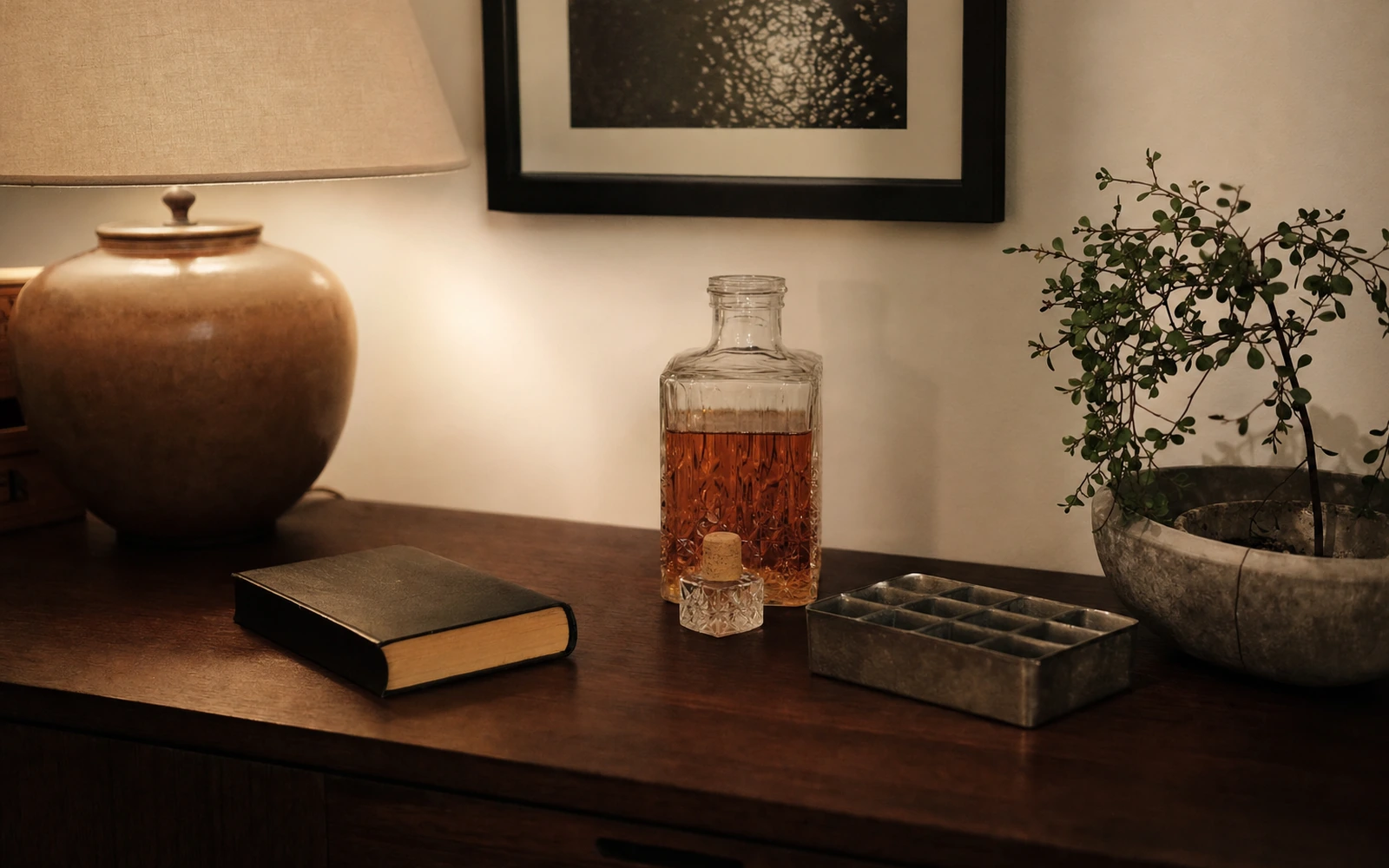
The short answer
To cut back on whiskey at night, keep the part of the ritual that helps you transition and change the part that keeps escalating. Move the bottle out of reach, delay the pour, shrink the serving, and replace the first five minutes with something that still marks the end of the day.
If this describes your evenings, a licensed clinician can review the rest privately. Takes 60 seconds.
Quick answer: To cut back on whiskey at night, keep the part of the ritual that helps you transition and change the part that keeps escalating. Move the bottle out of reach, delay the pour, shrink the serving, and replace the first five minutes with something that still marks the end of the day.
A nightcap can feel different from other drinking. It is not a party. It is not a bar. It is quiet, controlled, and adult. A pour after the laptop closes. A glass while the house gets quiet. Something that says the day is over.
That is exactly why it can become sticky. The drink is tied to relief.
Keep the ritual, change the pour
If the ritual is doing a job, do not rip out the whole thing first. Keep the chair, the book, the low light, the music, the shower, the ten minutes alone. Change the alcohol part.
That might mean pouring less, pouring later, or making some nights alcohol-free without changing the rest of the wind-down.
Move the bottle out of arm’s reach
A bottle on the counter or shelf is an invitation. Put it somewhere that requires a decision. Not hidden in a dramatic way. Just less available.
Make the nightcap something you choose, not something the room suggests every time you walk through it.
Replace the first five minutes
The first five minutes after work, dinner, or cleanup are often the risk point. Have a replacement ready before that moment arrives. Shower. Walk around the block. Make tea. Stretch. Sit outside. Put your phone in another room.
It does not need to be impressive. It needs to interrupt the old opening move.
Watch the morning, not just the night
If cutting back feels abstract, track the morning. Sleep, mood, patience, appetite, workout, focus. Not obsessively. Just enough to notice whether the nightcap is taking more than it gives.
If the pull is the real issue
Some routines are easier to change than others. If you can see the pattern clearly but still feel pulled back into it, more support may be useful.
Onir is built for adults who want a private way to look at their options. You can start with an assessment and see whether clinician-guided support fits your goal.
The science behind Onir has been covered by
82%
drinking less within two weeks
30+ yrs
FDA-approved & clinically studied
1,200+
clinical studies behind it
$99
per month, shipped discreetly
In their words
“I set one alarm for 5 p.m. and stopped thinking about it. Three weeks later the second glass just wasn't interesting anymore. No willpower involved.”
Individual results vary.
References
Keep reading
Lifestyle
How to cut back on wine at night without making it a whole identity
A better plan for the 6 p.m. pour.
ReadSleep
Why alcohol wakes you up at 3 a.m.
The split-night pattern is common: fast sleep, then a restless 3 a.m. wakeup. Here is why alcohol can do that and what to test first.
ReadGuides
How to drink less without quitting completely
Less can be the goal. Make it specific enough to work.
Read
A quieter next step, when you want one
If practical changes have not been enough, a licensed clinician can review the rest privately. It doesn't commit you to anything.
60 seconds · 11 questions · Fully refunded if you're not approved