Drinking less
How to cut back on beer without quitting
A practical way to reduce beer without turning it into a public identity change.
By Mara Ellis for Onir
The short answer
To cut back on beer without quitting, make the pattern more visible before you try to overhaul it. Decide when beer belongs, change the first-beer cue, stop keeping automatic volume at home, and make a plan for what you will hold when everyone else has one.
If this describes your evenings, a licensed clinician can review the rest privately. Takes 60 seconds.
Quick answer: To cut back on beer without quitting, make the pattern more visible before you try to overhaul it. Decide when beer belongs, change the first-beer cue, stop keeping automatic volume at home, and make a plan for what you will hold when everyone else has one.
Beer is easy to make invisible. A bottle while the grill heats up. A can before kickoff. Another because the cooler is open. One more because someone brought over a six-pack and nobody is counting. It does not always feel like a decision. It feels like the background of the thing you were already doing.
That is why cutting back on beer usually works better when the plan is practical, not dramatic. You do not have to announce that you are done drinking. You do not have to become the person at the table explaining your whole reason. You just need fewer automatic moments.
Separate weekday beer from weekend beer
Start by separating the pattern. A lot of men do not have one drinking habit. They have a few: the weeknight beer, the game beer, the yardwork beer, the bar beer, the Friday beer that turns into Saturday.
Pick the easiest lane first. For many people, that is weeknights. Keep the bigger social decisions for later and start with a cleaner rule: beer belongs on certain nights, not every night by default.
Change the first-beer cue
The first beer is usually the important one. After that, the night has a direction. If the cue is getting home, opening the fridge, starting dinner, walking into the garage, or turning on the game, move one piece of that sequence.
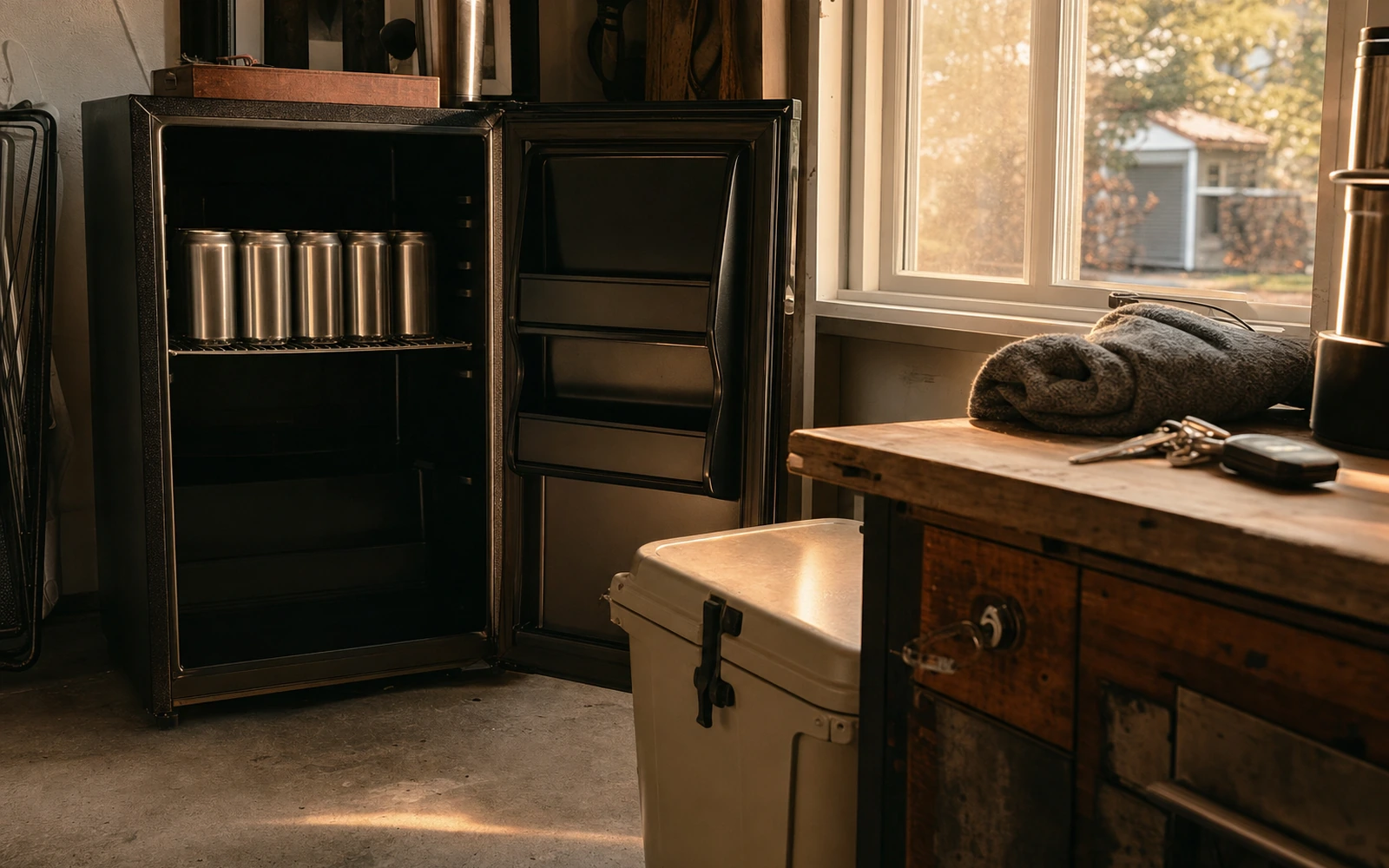
Put beer somewhere less automatic. Keep cold zero-proof options where the beer used to be. Take ten minutes before opening anything. You are not trying to win an argument with yourself. You are trying to make the old move less frictionless.
Stop buying the autopilot case
If beer is always in the house, the decision keeps renewing itself. Buying less is not a personality statement. It is just environment design.
Instead of keeping a full case cold, buy what fits the plan. If the plan is two beers on Saturday, do not make Tuesday night negotiate with a stocked fridge.
Use the first two-drink rule
For nights when you are drinking, decide what happens after the first two. That does not mean two is the right number for everyone. It means the second drink is a useful checkpoint because the night still has shape.
After two, switch locations, switch what you are holding, eat something, or end the drinking part of the night. The point is to create a moment where the next beer is a choice again.
Have something normal to hold
At a cookout, game, or bar, not holding anything can make you feel like you owe people an explanation. Keep it boring. A plain can, a soda with lime, coffee, water, whatever fits the room. The goal is not to perform health. It is to avoid having your hands make the decision for you.
When structure is not enough
Some people can cut back with rules and a better setup. Others can make the plan clearly and still watch it reset in the same situations. If the pull keeps showing up, that is useful information.
Onir is a private way to explore whether clinician-guided support may fit your goal, whether that goal is drinking less, taking a break, or stopping. You can start with a short assessment and see what makes sense from there.
The science behind Onir has been covered by
82%
drinking less within two weeks
30+ yrs
FDA-approved & clinically studied
1,200+
clinical studies behind it
$99
per month, shipped discreetly
In their words
“I set one alarm for 5 p.m. and stopped thinking about it. Three weeks later the second glass just wasn't interesting anymore. No willpower involved.”
Individual results vary.
References
Keep reading
Drinking less
Why weekends turn into more drinks than you planned
Weekends remove the usual brakes. That does not mean you need a dramatic fix. It means you need a plan for the moments that repeat.
ReadGuides
How to drink less without quitting completely
Less can be the goal. Make it specific enough to work.
ReadMedication education
How naltrexone helps you drink less
A plain-English guide to how the medication works, what the evidence shows, and why the first few weeks are only the beginning.
Read
A quieter next step, when you want one
If practical changes have not been enough, a licensed clinician can review the rest privately. It doesn't commit you to anything.
60 seconds · 11 questions · Fully refunded if you're not approved